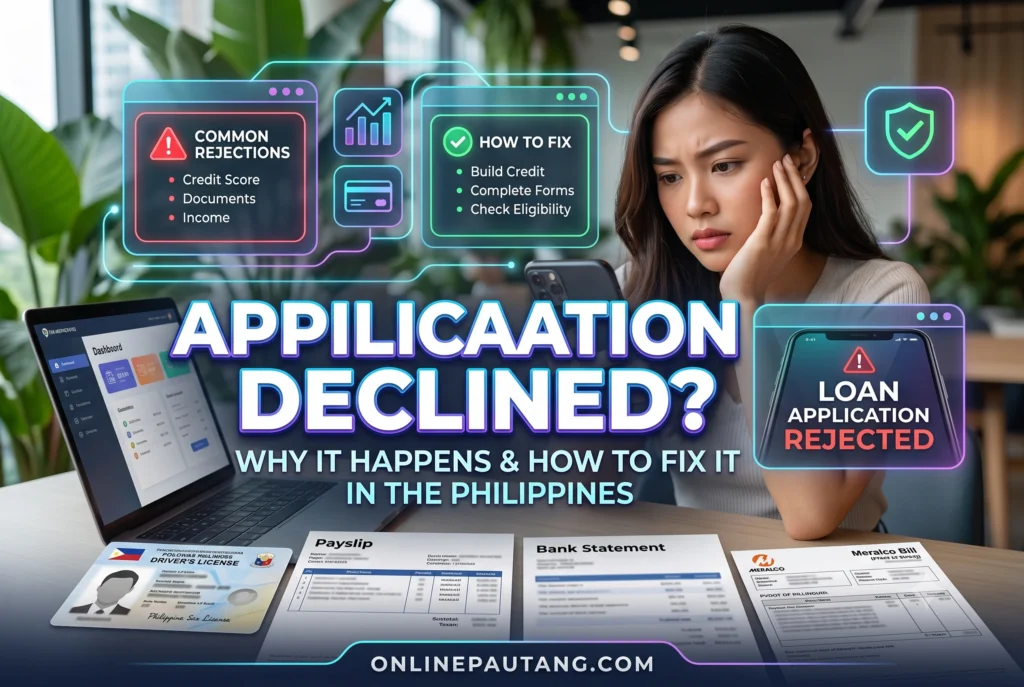
Take a deep breath. Getting an instant rejection message on your screen when you desperately need funds is incredibly stressful. It feels personal, frustrating, and scary. Please remember that an algorithmic denial does not define your financial worth, and more importantly, having a rejected application or even an unpaid civil debt will not send you to jail in the Philippines. You are not alone in this situation. Thousands of Filipinos face these automated walls every single day.
We need to step back from the panic and look at this like an engineer would. When a digital lending app says “no” in under five minutes, a human never even looked at your file. You were rejected by a machine. To fix it, we have to understand the invisible triggers that these systems use to assess risk.
Summary:
If you are wondering why your loan application was rejected in the Philippines, the cause is usually an automated system flagging your profile for technical reasons, not a manual review of your finances. For applicants with no credit history, apps rely on strict algorithms including eKYC liveness detection, exact name-matching between your valid ID and e-wallets like GCash, and device ID tracking to prevent fraud. Fixing these hidden technical errors—such as glare on your ID photo or mismatched spelling—often resolves the issue and allows you to successfully reapply after the mandatory cooling-off period.
Key Takeaways: Common Rejection Triggers vs. Solutions
| Algorithmic Trigger | Why It Fails You | Actionable Fix |
| Liveness Check Failure | AI thinks your selfie is a flat photo or taken in poor lighting. | Move to natural daylight, clean your lens, and blink slowly when prompted. |
| Name Mismatch (API) | “Ma.” on your ID but “Maria” on GCash triggers an anti-fraud block. | Update your e-wallet name to perfectly match your primary government ID. |
| Device ID Flagging | Multiple rejected accounts applied using the same phone. | Use your own personal device; never let friends apply on your smartphone. |
| OCR Reading Error | Glare or cropped borders prevent the system from reading your ID text. | Place the ID on a dark, flat surface. Ensure all four corners are visible. |
| High Income-to-Loan Ratio | Asking for PHP 10,000 on a PHP 12,000 declared monthly income. | Request smaller, entry-level amounts (PHP 1,000 – PHP 2,000) first. |
Why Did My Loan App Automatically Reject Me Within Seconds?
A lightning-fast rejection means you tripped an automated anti-fraud filter, such as a failed facial recognition scan, a suspicious device ID, or an inconsistent digital footprint. The system halted your application before checking your actual financial capacity.
When you hit submit, legitimate SEC-registered apps run your data through an instant verification engine. This engine does not care how badly you need the money; it only cares about mathematical probability and fraud prevention. If the machine detects an anomaly, it issues a blanket denial to protect the lender.
How Does a Failed Liveness Check Trigger a Rejection?
If the app’s camera cannot detect depth, eye movement, or clear facial features, the eKYC system assumes you are a fraudster holding up a printed photograph, resulting in an immediate auto-decline.
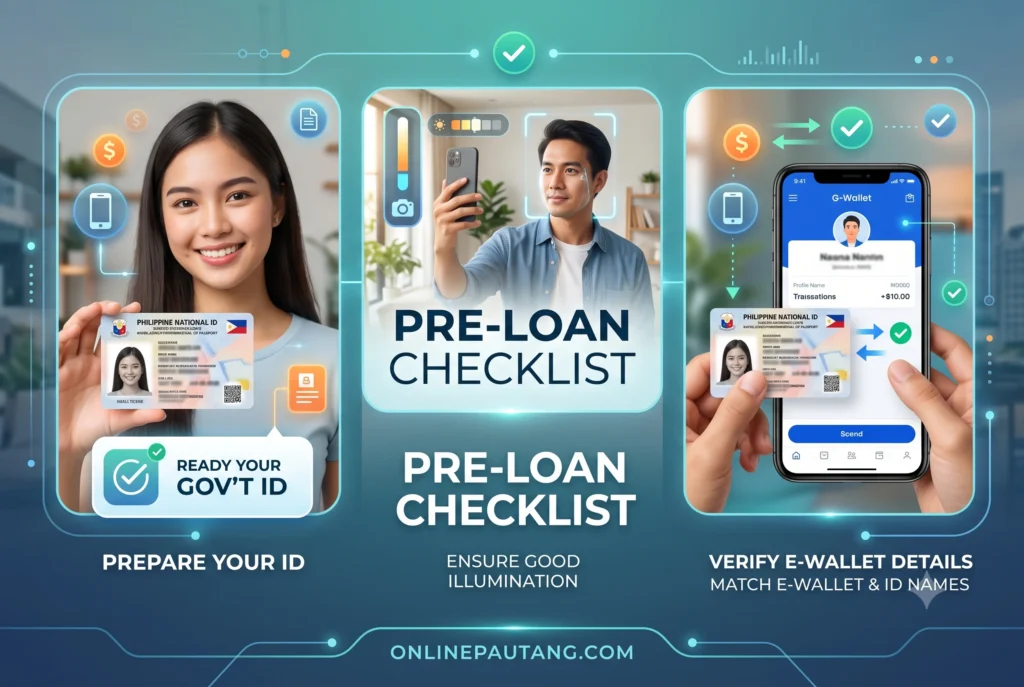
Philippine lending platforms use electronic Know Your Customer (eKYC) technology. This software maps the geometry of your face. If you take your verification selfie in a dark room, or with bright backlight from a window behind you, the camera sensor flattens your features. The system is programmed to assume that bad lighting equals a spoofing attempt. Next time you apply, step outside or face a window so natural light hits you directly. Take off your glasses, ensure your face fills the oval on the screen, and follow the blinking or head-turning prompts smoothly.
Is My Phone’s Device ID Blocking My Approval?
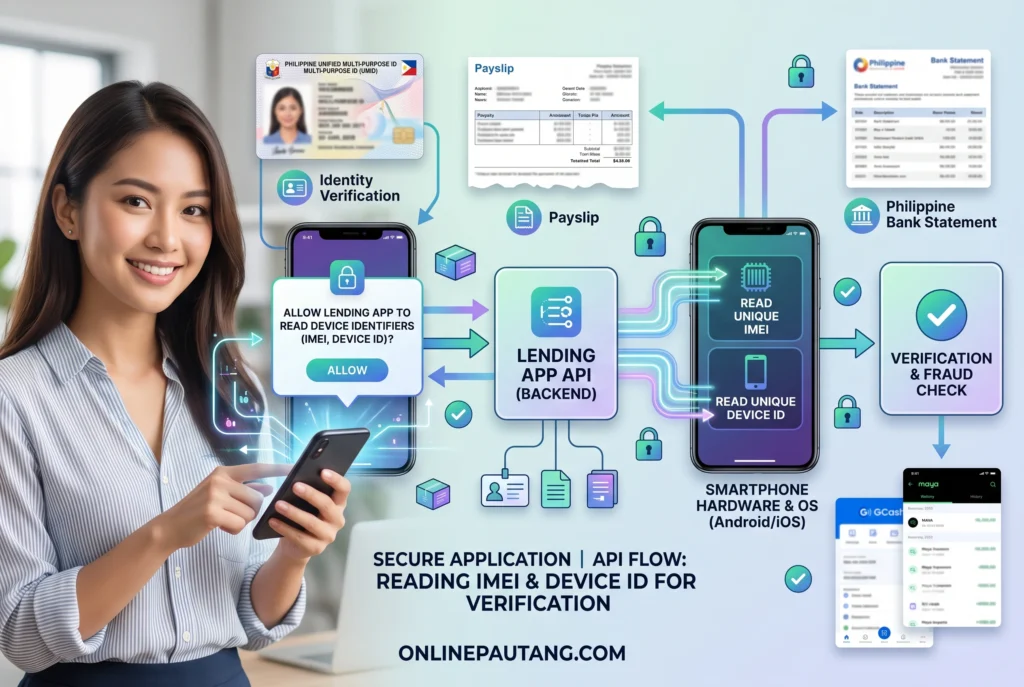
Lenders track the unique IMEI or MAC address of your smartphone to prevent syndicates from creating multiple fake accounts on a single device. If someone else previously applied on your phone, you might inherit their rejection.
Your digital footprint matters just as much as your physical ID. Lenders check if your device is associated with past defaults or unusual activity. If you share a phone with a sibling who has defaulted on digital credit, the app’s risk algorithm flags your device as “high risk.” Always apply using your own primary smartphone. Avoid applying while connected to public Wi-Fi networks (like in malls or cafes), as security systems sometimes block IP addresses associated with heavy, erratic traffic.
Why Was My Loan Rejected Even With a Valid Primary ID?
Having a valid UMID, Passport, or National ID is useless if the system’s text-reading software cannot clearly extract the data or if that data contradicts the information on your disbursement account.
Many frustrated borrowers message customer support insisting they uploaded a pristine Philippine Identification System (PhilSys) card. What they fail to realize is that a human agent isn’t reading that card.
How Do Spelling Errors Between My ID and E-Wallet Cause Auto-Declines?
Lending algorithms perform automated cross-checks between your ID name and your GCash or Maya account name. Even minor spelling discrepancies, like a missing middle initial, trigger immediate fraud alerts and application denial.
This is the most common invisible wall for Filipino borrowers. Let us say your valid UMID says “Maria Santos Reyes,” but your verified GCash account is registered as “Ma. Santos Reyes.” When the lending app’s API pings the e-wallet to verify your identity for disbursement, the systems register a mismatch. To the algorithm, “Ma.” and “Maria” are two entirely different people. The system immediately rejects the application to prevent funds from being sent to a potentially stolen account. Before applying anywhere, verify that your disbursement channel exactly mirrors the legal name printed on your ID.
Are Faded ID Borders or Glare Ruining My Chances?
Optical Character Recognition (OCR) technology requires high-contrast images to read your ID. Flash glare, blurred text, or cropped card edges cause the OCR to fail, leading to an automatic document rejection.
When you snap a photo of your driver’s license, the app uses OCR to turn that picture into readable text. If your camera flash creates a white blinding spot over your birthdate, the OCR reads it as missing data. If you hold the ID in your hand and your thumb covers a corner, the system assumes the card is tampered with. To fix this, place your ID on a dark, flat table. Turn off your camera flash. Hold your phone perfectly parallel to the table and ensure a small margin of the dark table is visible around all four edges of the ID.
Will Having No Credit History Guarantee a Rejection?
Lack of traditional credit history does not guarantee rejection in the Philippines, as modern fintech apps utilize alternative data to score you. However, it strictly limits the loan amount you can initially access.
If you have never owned a credit card or taken a bank loan, you are what the Credit Information Corporation (CIC) calls “invisible.” Traditional banks will almost certainly deny you, but digital lending apps are built specifically for your demographic. They just evaluate you differently.
How Do Lenders Evaluate First-Time Borrowers Without a Credit Score?
Fintech lenders assess first-time borrowers by analyzing alternative metrics, such as how long your SIM card has been active, your e-wallet transaction volume, and the consistency of your application data.
Since they cannot check a traditional credit bureau for your repayment history, these apps look at stability. A prepaid SIM card registered under your name that has been active for five years shows stability. If you give permission for the app to view your SMS data (a common practice outlined in their privacy policies), the algorithm looks for regular utility bill payment receipts or payroll deposits to estimate your cash flow. If your digital life looks chaotic or brand new, the risk score drops.
Did I Apply for an Unrealistic Amount for a Starter Loan?
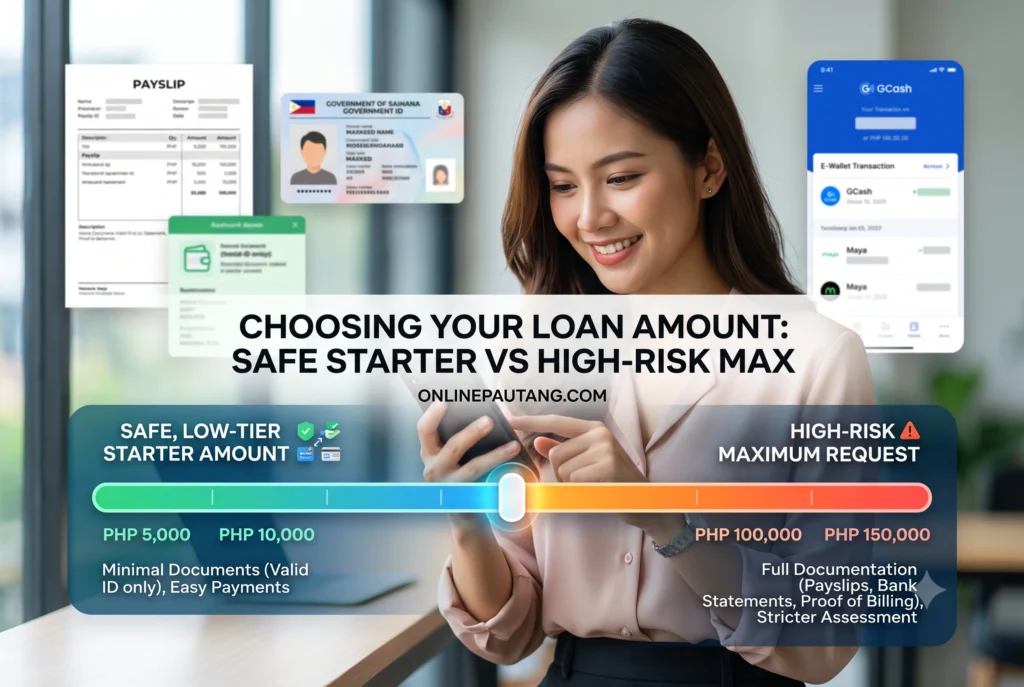
Requesting the maximum advertised loan limit on your first try signals high financial distress to the algorithm, triggering a rejection due to an excessive income-to-loan ratio.
Marketing banners love to advertise “Up to PHP 25,000!” Do not fall for it. If you declare a monthly income of PHP 15,000 and immediately try to borrow PHP 20,000, the algorithm calculates that you have no mathematical way to pay it back within 30 days without starving. For your initial request, you must target conservative starter loan amounts. Ask for PHP 1,000 to PHP 2,500. You have to prove you can handle a small debt before the system unlocks the higher tiers.
Can I Reapply Immediately After a Loan App Rejection?
You cannot successfully reapply right away because lending systems enforce an automated cooling-off period, temporarily blocking your profile from submitting a new application for a set number of days.
Panic-applying is the worst action you can take. If the app says “Try again in 30 days,” attempting to create a new account with a different phone number will only make your situation worse.
What is an Algorithmic Cooling-Off Period?
A cooling-off period is an automated security measure lasting between 7 to 30 days that prevents desperate applicants from spamming the system with modified data after an initial rejection.
When you are rejected, your profile, device ID, and submitted ID numbers are placed in a temporary holding pen. If you try to reapply immediately by tweaking your monthly income from PHP 15,000 to PHP 30,000 hoping for a different result, the system detects the data manipulation. It will permanently flag your account for fraud. You must wait out the exact timer displayed on your screen. Use this time to fix the errors that caused the initial decline.
Does Getting Rejected Lower My Credit Score in the Philippines?
Digital loan rejections generally do not harm your official credit score, as most fintech apps perform soft inquiries that are not heavily penalized by the Credit Information Corporation (CIC).
Unlike the US system where applying for ten credit cards in a week will destroy your FICO score, the Philippine credit ecosystem operates differently. The CIC focuses heavily on positive and negative payment behaviors rather than application velocity. While the specific app you applied to will keep an internal record of your rejection, it will not typically ruin your chances with a completely different lending company down the road.
What Are My Next Steps for First-Time Loan Apps?
Your immediate next steps involve cleaning up your digital data, ensuring perfect consistency across all your IDs and accounts, and carefully selecting a legitimate, low-barrier lender for your next attempt.
Approach your next attempt like a formal job interview. Everything must be pristine. Taking the time to prepare will drastically improve your approval odds when navigating first-time loan apps.
How Can I Clean Up My Digital Application Profile?
You can clean your profile by aligning your e-wallet name with your primary ID, ensuring your SIM card is registered correctly, and clearing your phone’s cache before your next application.
Start with your disbursement channel. Contact GCash or Maya customer service if you need to update your registered name to match your physical ID exactly. Next, ensure your phone is well-lit and the camera lens is wiped clean before taking any photos. Finally, close out any other lending apps you have open in the background, clear the cache of the app you intend to use, and sit down in a quiet, bright room to complete the process uninterrupted.
What Lower-Barrier Alternatives Exist Right Now?
If digital direct-cash apps consistently fail, consider utilizing embedded credit lines within your existing e-wallets, such as GCredit or SPayLater, or exploring regulated pawnshops that do not require algorithms.
If your digital footprint simply isn’t strong enough yet, look at platforms where you already have a history. If you use Shopee frequently, activating SPayLater might be easier than getting a separate cash loan. If you have been paying bills via GCash, check your GScore to see if GCredit is unlocked. If all digital avenues are blocked, traditional SEC-regulated pawnshops remain a viable, immediate option for small cash needs without the barrier of facial recognition software.
Protect yourself from predatory lenders. Only engage with companies officially listed on the Securities and Exchange Commission (SEC) website. If a lender texts you offering guaranteed approval in exchange for a processing fee, block them immediately; it is a scam. Legitimate financial institutions will never ask for money upfront to release a loan. By understanding how these automated systems work, you can present a clean, verifiable profile that algorithms trust, securing the funds you need safely and responsibly.
References
- Securities and Exchange Commission PhilippinesOrganization: SEC PhilippinesResource: List of Registered Online Lending PlatformsURL: https://www.sec.gov.ph/lending-companies-and-financing-companies-2/list-of-registered-online-lending-platforms/
- Credit Information CorporationOrganization: CICResource: Understanding Your Credit Report and ScoreURL: https://www.creditinfo.gov.ph/understanding-your-credit-report
- Bangko Sentral ng PilipinasOrganization: BSPResource: Financial Consumer Protection FrameworkURL: https://www.bsp.gov.ph/SitePages/InclusiveFinance/ConsumerProtection.aspx
- National Privacy CommissionOrganization: NPCResource: Guidelines on the Processing of Personal Data for Loan OperationsURL: https://www.privacy.gov.ph/2020/09/npc-issues-guidelines-on-the-processing-of-personal-data-for-loan-operations/
Disclaimer:This article contains affiliate links. We may earn a small commission if you apply for a loan through our links, at no extra cost to you. The information provided is for educational purposes only and does not constitute professional financial advice. Please borrow responsibly.
Last Updated on July 4, 2026 by Elena Reyes
