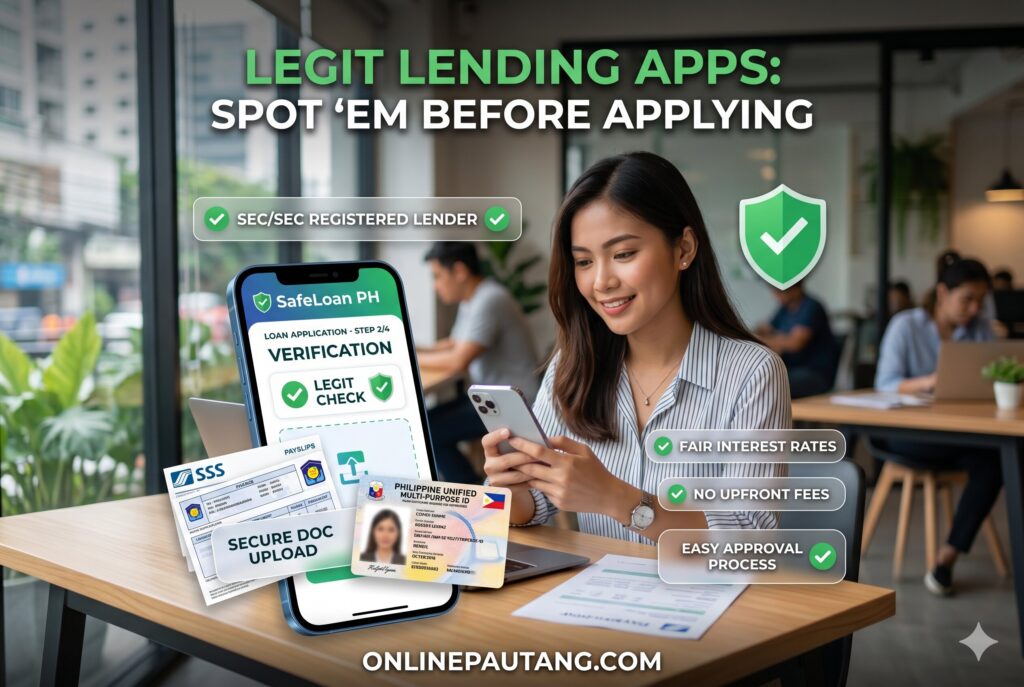
Many Filipinos searching for fast cash online end up facing fake “guaranteed approval” loan apps, abusive collection behavior, or privacy risks. The safest way to use safe easy approval loan apps philippines searches is to verify whether the lender follows Philippine digital lending rules, protects borrower data, and uses transparent approval practices instead of pressure tactics. Legitimate lending apps usually show SEC registration details, explain repayment terms clearly, limit app permissions, and avoid unrealistic approval promises. Borrowers should also check data privacy practices, review app permissions carefully, and avoid apps that request excessive access to contacts, SMS, or photo galleries without valid onboarding reasons.
Why “Easy Approval” Does Not Always Mean Safe ⚠️
The phrase “easy approval” has become one of the most heavily abused marketing terms in the Philippine lending space. Some digital lenders genuinely simplify verification for freelancers, gig workers, sari-sari store owners, or first-time borrowers. Others use the phrase to lure desperate applicants into harmful lending systems.
Legitimate digital lenders still evaluate risk. Even when approval is fast, regulated lenders usually review:
- Valid government IDs
- Mobile number consistency
- Device reputation
- Income patterns
- E-wallet activity
- Existing loan obligations
- Fraud indicators
- Identity verification behavior
That means no responsible lender can honestly promise “100% guaranteed approval.”
If an app claims:
- “Instant approval for everyone”
- “No rejection ever”
- “Guaranteed cash in 2 minutes”
- “No verification needed”
…it should immediately trigger caution.
Many borrowers searching for easy approval loan apps philippines unknowingly confuse fast onboarding with legitimate lending behavior. Safe apps still follow risk assessment procedures even when requirements are simplified.
The Biggest Risks Hidden Behind Fake Loan Apps
Predatory Lending Practices
Some apps intentionally target financially stressed users by offering small initial loans with:
- Extremely short repayment windows
- Hidden charges
- Aggressive rollover systems
- Daily penalty accumulation
- Harassing collection tactics
These apps often advertise “easy approval” aggressively because they rely on volume rather than responsible underwriting.
Borrowers sometimes realize the real cost only after funds are released.
Privacy Abuse and Permission Harvesting
One of the most serious issues in Philippine digital lending involves abusive data collection.
Certain apps request:
- Contact list access
- SMS access
- Camera permissions
- Full gallery access
- Call logs
- Location tracking
While some permissions are needed for eKYC or fraud prevention, excessive access can become dangerous when used for harassment or intimidation.
The National Privacy Commission has repeatedly warned consumers about improper data handling and unauthorized contact harassment linked to some online lenders.
Fake Approval Messages and SMS Scams
Some scammers impersonate lending companies using:
- Fake approval texts
- Verification fee requests
- Deposit-before-release scams
- Phishing links
A legitimate lender does not require upfront “processing deposits” before releasing a loan.
If an SMS asks you to pay first before receiving funds, stop immediately.
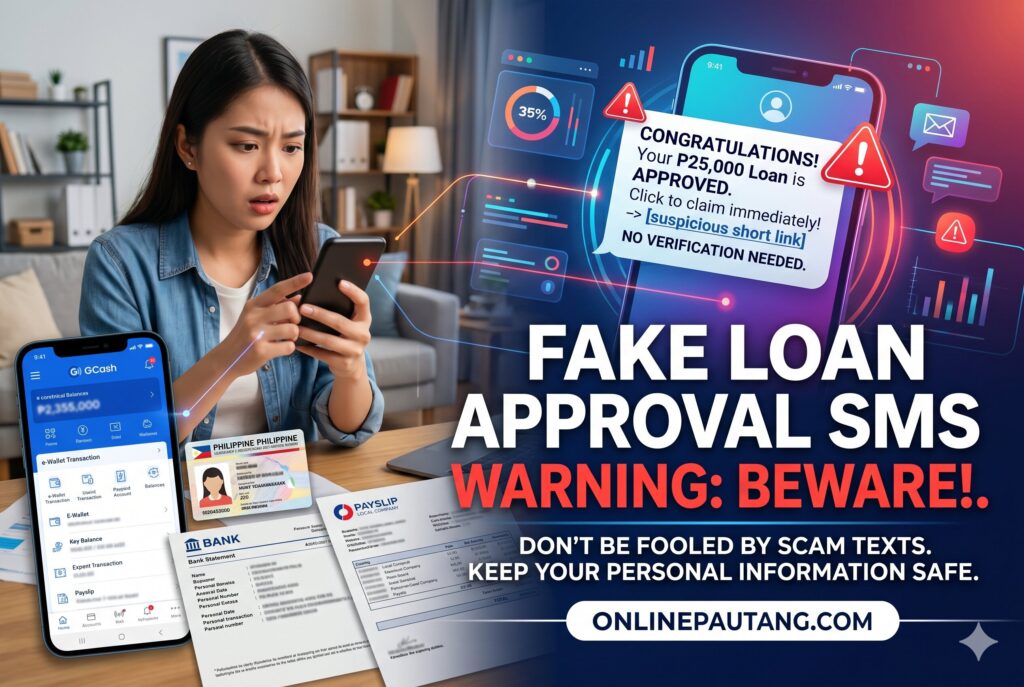
Fake Loan Approval SMS Warning Example (onlinepautang.com)
How to Verify If a Loan App Is Legit ✅
Check SEC Registration Details
One of the most important steps is verifying whether the lender operates legally.
Legitimate online lenders in the Philippines should have registration or authorization records connected to lending operations. Many regulated firms openly display:
- SEC registration numbers
- Corporate entity names
- Lending license information
- Official customer service channels
Apps that hide ownership information should be treated cautiously.
Look for Transparent Loan Terms
Safe lenders clearly explain:
- Interest rates
- Processing fees
- Due dates
- Late payment penalties
- Extension policies
- Total repayment amount
A major red flag is when repayment information only appears after submission.
Responsible digital lenders explain obligations before disbursement.
Review the Privacy Policy Carefully
Many borrowers skip the privacy policy entirely. That creates risk.
Check whether the app explains:
- What borrower data is collected
- Why permissions are needed
- Whether data is shared with third parties
- How long information is stored
- Borrower complaint channels
Apps with vague or missing privacy disclosures deserve caution.
Verify Google Play Reviews Properly
Do not rely only on star ratings.
Instead, search for complaint patterns involving:
- Contact harassment
- Hidden charges
- Unauthorized deductions
- Data exposure
- Collection intimidation
- Repayment disputes
Fake apps often manipulate ratings with short generic reviews.
Look for detailed borrower experiences instead.
The Role of BSP and Philippine Lending Compliance
The Bangko Sentral ng Pilipinas plays a major role in shaping fintech oversight, especially around digital payments, e-wallet ecosystems, and financial consumer protection expectations.
While not every lending platform operates directly under BSP licensing structures, responsible fintech ecosystems increasingly align with:
- KYC standards
- Fraud prevention controls
- Digital identity verification
- Secure onboarding
- Complaint handling mechanisms
- Responsible disclosure practices
Apps integrated with trusted e-wallet systems or regulated payment channels generally face stronger operational scrutiny.
This is particularly relevant for borrowers exploring gcash loan apps because many users assume all apps connected to e-wallet ecosystems are automatically safe. That assumption can be risky. Borrowers should still verify the actual lending entity behind the app.
How Real Approval Systems Actually Work
Legit Lenders Still Perform Risk Checks
Even approval-friendly lenders use internal fraud and risk systems.
Common checks include:
- Device consistency
- SIM registration signals
- ID verification quality
- Facial verification accuracy
- Repayment history
- Duplicate account detection
- Employment or cash flow indicators
Apps that skip all verification entirely may expose borrowers to identity fraud risks or operate outside normal lending controls.
Why Some Borrowers Get Rejected
Applicants sometimes assume rejection means the lender is fake. That is not always true.
Legitimate apps may reject applications because:
- Selfie verification failed
- ID images were blurry
- Multiple loan applications appeared simultaneously
- Device behavior triggered fraud alerts
- Existing unpaid loans were detected
- Income signals appeared inconsistent
This explains why easy approval apps reject applications even when marketing messages sound borrower-friendly.
Gig Workers and Freelancers Face Different Evaluations
Modern digital lenders increasingly evaluate non-traditional income patterns.
Freelancers, riders, online sellers, and gig workers may still qualify if they show:
- Stable e-wallet cash flow
- Consistent digital transactions
- Regular remittance patterns
- Repeat account activity
- Verified identity consistency
Safe lenders increasingly rely on behavioral verification instead of requiring only traditional payslips.
Warning Signs of Dangerous Loan Apps 🚨
Excessive Permission Requests
Be cautious if an app demands:
- Full contact syncing unrelated to verification
- Constant background access
- Gallery access without document uploads
- Microphone access for no reason
Permission abuse has become one of the strongest warning signs in Philippine digital lending complaints.
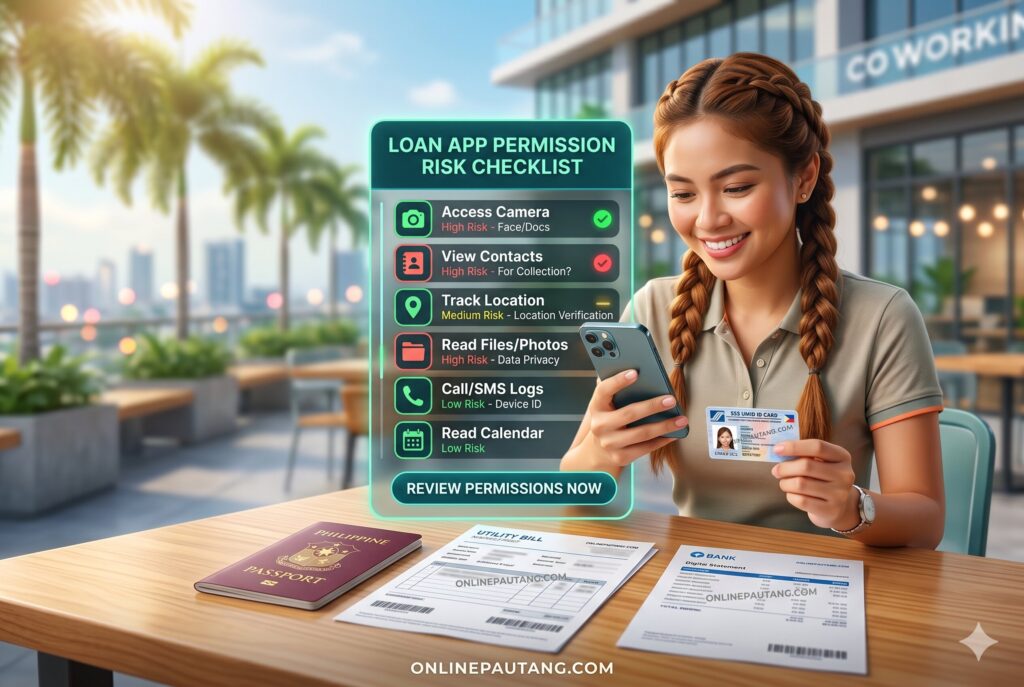
Loan App Permission Risk Checklist (onlinepautang.com)
Aggressive Psychological Pressure
Scam-oriented lenders often create urgency through:
- Countdown approval timers
- Threatening notifications
- “Apply now or lose eligibility”
- Repeated pressure SMS messages
Safe lenders explain timelines clearly instead of forcing rushed decisions.
No Physical Company Identity
Check whether the lender provides:
- Registered company name
- Customer support channels
- Email support
- Official website
- Corporate disclosures
Apps operating anonymously create higher borrower risk.
Unrealistic Loan Offers
Be cautious if:
- Large loans are offered instantly to first-time users
- No identity verification exists
- No repayment explanation is provided
- Income is never discussed
- The app promises universal approval
Responsible lenders still evaluate repayment ability.
Safe Borrower Habits Before Applying
Use Official App Stores Only
Avoid downloading APK files from:
- Random Facebook pages
- Telegram groups
- SMS links
- Third-party websites
Official app stores provide at least some layer of platform review and malware filtering.
Limit Unnecessary Permissions
Borrowers should manually review permissions before continuing onboarding.
If a permission seems unrelated to lending operations, reconsider the application.
Avoid Applying to Multiple Apps Simultaneously
Mass applications can:
- Increase fraud suspicion
- Trigger duplicate identity checks
- Lower approval confidence
- Create repayment overlap risk
Many legitimate lenders evaluate application frequency patterns.
Read Collection Policy Disclosures
A trustworthy lender explains:
- Payment reminders
- Escalation procedures
- Communication channels
- Complaint resolution options
Apps that avoid explaining collection practices deserve caution.
Quick Safety Checklist Before You Submit Any Loan Application
| Safety Check | Why It Matters |
|---|---|
| SEC details visible | Indicates legal lending presence |
| Clear repayment breakdown | Prevents hidden fee surprises |
| Reasonable app permissions | Reduces privacy abuse risk |
| Transparent privacy policy | Protects borrower data |
| Real customer support | Helps resolve disputes |
| No upfront payment request | Avoids advance-fee scams |
| Balanced user reviews | Reveals actual borrower experience |
| Secure onboarding process | Reduces fraud exposure |
What Legitimate Digital Onboarding Usually Looks Like
Identity Verification (eKYC)
Most safe lenders now use electronic Know Your Customer systems.
Typical onboarding may include:
- Government ID upload
- Selfie verification
- Face matching
- Mobile number verification
- OTP authentication
These steps help reduce synthetic identity fraud and account misuse.
Data Matching and Fraud Detection
Modern fintech lenders often compare:
- Device fingerprints
- Login behavior
- Duplicate account signals
- Geolocation consistency
- SIM activity patterns
This is why borrowers sometimes experience delays even with “easy approval” marketing.
Responsible Disclosure During Approval
Legitimate lenders typically disclose:
- Approved amount
- Interest structure
- Repayment schedule
- Net disbursement amount
- Total payable balance
Hidden repayment calculations are a major warning sign.
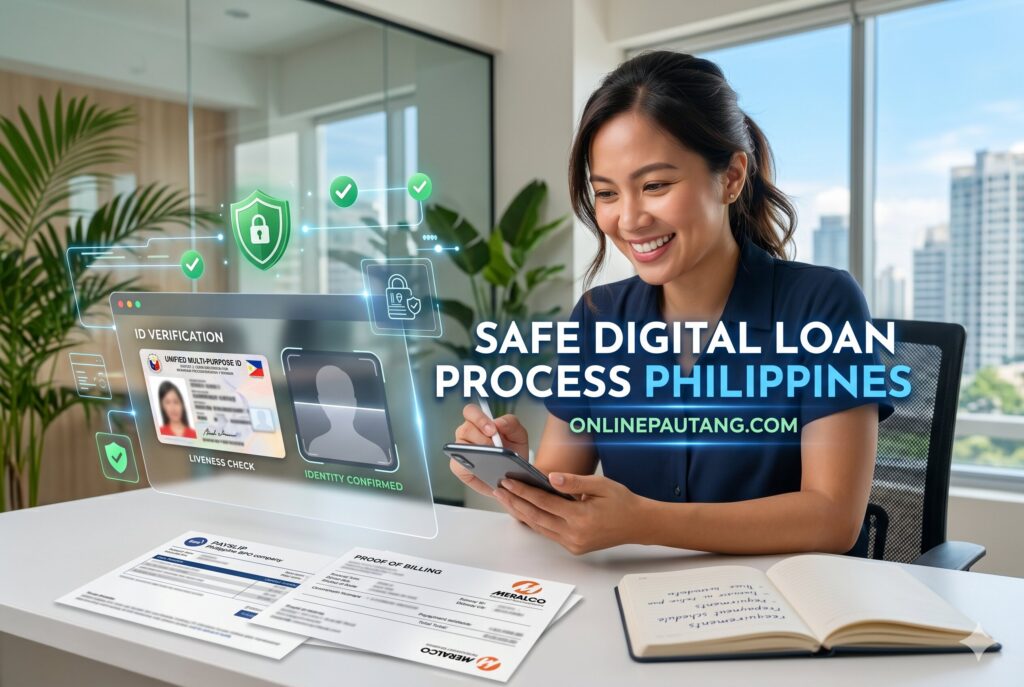
Safe Digital Loan Application Process Philippines (onlinepautang.com)
Are Guaranteed Approval Apps Real?
No legitimate lender can guarantee approval for every borrower.
Even fast-approval apps still evaluate:
- Identity validity
- Fraud risk
- Repayment capability
- Existing loan exposure
- Behavioral signals
“Guaranteed approval” claims are commonly associated with:
- Misleading advertising
- Predatory lending
- Data harvesting operations
- Scam onboarding funnels
Borrowers should treat such promises carefully.
Can Loan Apps Access Your Contacts?
Some loan apps request contact access during onboarding.
In legitimate systems, permissions should be:
- Clearly disclosed
- Operationally justified
- Limited in scope
However, abusive lenders have previously misused contact data for:
- Collection intimidation
- Public shaming
- Harassment messages
Borrowers should avoid apps demanding excessive contact access without clear justification.
The National Privacy Commission has previously reminded digital platforms that borrower privacy rights remain protected under Philippine data privacy expectations.
How to Check SEC Registration
Borrowers can verify whether a lender publicly identifies:
- Registered corporate name
- Lending authority disclosures
- Official company records
- Customer service information
Safe lenders usually make this information easy to locate within:
- Their app
- Official website
- Terms and conditions
- Privacy policy
Apps hiding corporate identity details create higher risk exposure.
Real Borrower Behaviors That Increase Safety
Slow Down Before Submitting
Many victims of scam lending apps apply emotionally during financial emergencies.
Pause and verify:
- Company legitimacy
- Repayment structure
- Permission requests
- Borrower reviews
- Privacy practices
Fast decisions often create long-term problems.
Separate Emergency Need From Approval Marketing
A flashy approval promise does not mean:
- Lower risk
- Better terms
- Safe collections
- Secure data handling
Some dangerous lenders intentionally market to financially stressed users.
Protect Your Digital Identity
Never upload:
- IDs through random chat apps
- Selfies to unofficial websites
- OTP codes to unknown agents
Identity theft risks continue to grow across digital finance ecosystems.
FAQs About Safe Easy Approval Loan Apps Philippines
What is the safest way to apply for an online loan in the Philippines?
Use regulated-looking apps with transparent loan terms, clear company disclosures, reasonable permissions, and secure onboarding processes. Avoid apps promising guaranteed approval without verification.
Are easy approval loan apps legal in the Philippines?
Some are legitimate, while others operate irresponsibly or deceptively. Borrowers should verify corporate identity, repayment transparency, and privacy practices before applying.
Why do some loan apps ask for contacts?
Some apps request contacts for verification or fraud prevention purposes. However, excessive access requests may create privacy risks if abused for aggressive collections.
Can fake loan apps steal personal information?
Yes. Scam apps may harvest IDs, selfies, contact lists, and mobile data for fraud, harassment, or phishing activities.
Should I trust social media loan advertisements?
Not automatically. Many scam lending operations aggressively advertise through social platforms using fake approval promises and misleading testimonials.
Conclusion
Finding safe online lending options requires more than searching for fast approval promises. Borrowers should focus on legitimacy, transparency, privacy protection, and responsible lending behavior before sharing personal information.
Safe digital lenders usually explain repayment clearly, use secure verification systems, disclose company identity openly, and avoid abusive collection behavior. Meanwhile, dangerous apps often rely on unrealistic guarantees, pressure tactics, excessive permissions, and vague policies.
Before applying, take time to review app permissions, verify legitimacy indicators, and assess whether the lender behaves like a regulated financial platform rather than a high-pressure scam operation. Responsible borrowing starts with careful verification, not rushed approval marketing.
Disclaimer:This article contains affiliate links. We may earn a small commission if you apply for a loan through our links, at no extra cost to you. The information provided is for educational purposes only and does not constitute professional financial advice. Please borrow responsibly.
Last Updated on May 17, 2026 by Elena Reyes
