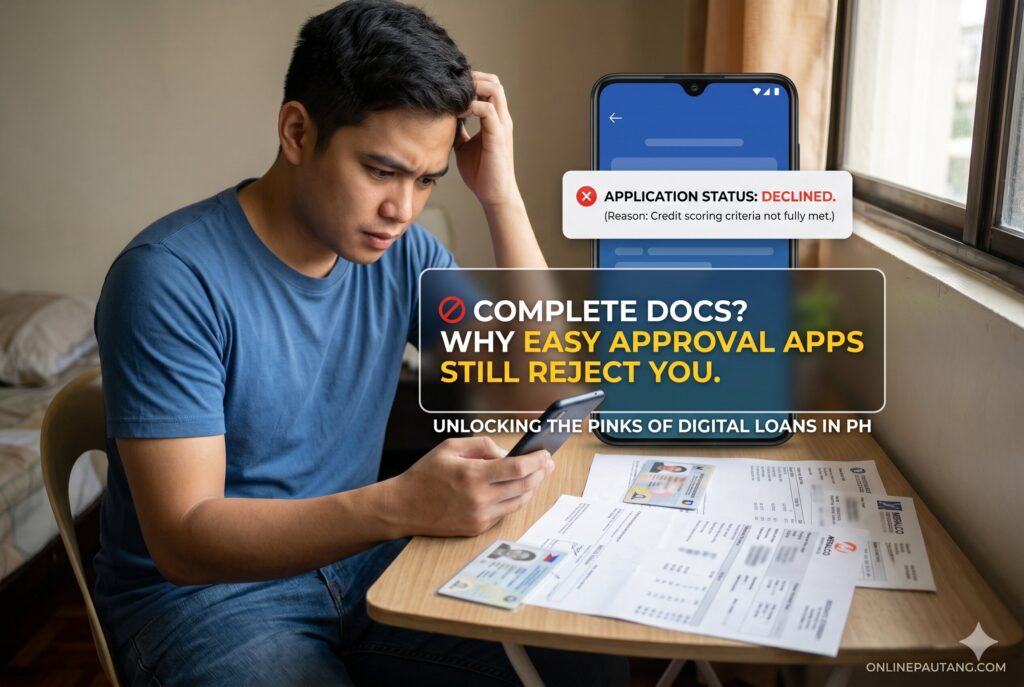
Many borrowers in the Philippines feel confused after getting rejected by apps advertised as “fast approval” or “easy approval.” In reality, most digital lenders use automated risk scoring systems that evaluate much more than IDs and salary details. A borrower can submit complete documents and still fail because of device fingerprinting issues, telecom verification mismatches, suspicious application behavior, failed selfie checks, inconsistent metadata, or multiple simultaneous loan attempts.
Modern lending apps analyze trust signals silently in the background. Weak internet uploads, recycled contact numbers, borrowed devices, edited ID photos, and repeated applications across several apps can trigger fraud detection systems even before human review happens.
Summary:
The primary reason an easy approval loan app rejected Philippines applications despite complete uploads is that digital lenders rely heavily on automated verification systems beyond basic IDs. Loan apps evaluate device identity, telecom verification, selfie consistency, GPS behavior, contact patterns, eKYC success rates, and borrower risk signals. Applicants who apply to multiple apps at once, upload blurry documents, switch phones frequently, or submit inconsistent personal information may trigger fraud detection systems automatically. Reapplying immediately after rejection can worsen approval odds. Improving application consistency, stabilizing digital identity signals, and preparing cleaner verification data significantly increases future approval chances in Philippine lending ecosystems.
⚠️ Why “Easy Approval” Does Not Mean Guaranteed Approval
The phrase “easy approval” is mostly a marketing message designed to attract borrowers who want quick access to funds. However, even many easy approval loan apps philippines still operate strict backend risk engines.
Most Philippine digital lenders are required to reduce fraud exposure, identity theft, fake borrowers, and repayment risks. Because of this, approval systems evaluate:
- Identity consistency
- Phone behavior
- Device reputation
- Borrowing patterns
- Contact verification
- Income plausibility
- Historical application activity
- eKYC accuracy
- Fraud probability signals
A borrower may appear qualified manually but still fail automated checks.
This is especially common among:
- First-time borrowers
- Freelancers with irregular income
- Gig workers
- Applicants using shared devices
- Users switching SIM cards frequently
- Borrowers applying to several apps simultaneously
🧠 How Automated Risk Scoring Actually Works
Modern loan apps rarely depend only on human review. Instead, they use automated risk scoring systems that instantly analyze hundreds of small data points.
Device Fingerprinting and Behavioral Analysis
One major factor is device fingerprinting.
Loan apps collect:
- Device model
- Operating system
- SIM activity
- IP address patterns
- GPS consistency
- App installation behavior
- Emulator detection
- Rooted phone detection
If a device was previously linked to rejected or delinquent borrowers, future applications from the same phone may receive higher risk scores.
For example:
- Using a borrowed phone
- Logging in from multiple devices
- Factory-reset phones
- Frequently changing SIM cards
These behaviors can resemble fraud activity.
Telecom Verification Matters More Than Borrowers Think
Telecom verification is another hidden approval layer.
Many apps silently evaluate:
- Active mobile usage
- SIM registration consistency
- Length of phone ownership
- Contact activity stability
- OTP delivery reliability
A newly registered SIM or temporary number may reduce trust scores.
Borrowers who frequently change numbers often encounter silent rejections because the system cannot establish digital identity continuity.
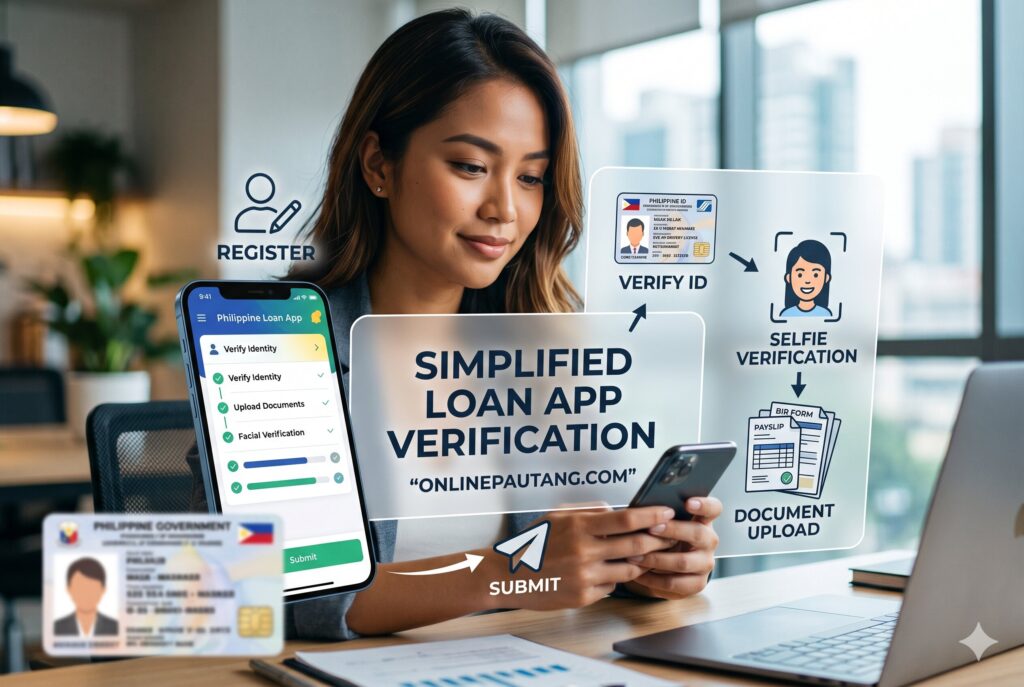
Philippine Loan App Verification Flow on Mobile Devices
📸 Why Applications Fail Even After Uploading IDs
One of the biggest misconceptions is believing that complete IDs automatically guarantee approval.
That is no longer how modern fintech onboarding works.
Failed eKYC Checks
Electronic Know Your Customer (eKYC) systems compare:
- Selfie images
- Facial geometry
- Lighting consistency
- ID authenticity markers
- Metadata integrity
- Real-time camera behavior
If the system detects:
- Screen replays
- Edited photos
- Low lighting
- Blurry selfies
- Cropped IDs
- Reflection glare
The application may fail instantly.
This explains why many users search for:
- selfie verification failed
- “Why was my selfie rejected?”
- “Why did my loan app fail facial verification?”
Weak Internet Connections Can Corrupt Uploads
A surprisingly common issue in Philippine applications involves unstable mobile data.
Weak internet can cause:
- Partial uploads
- Broken image metadata
- Corrupted files
- Incomplete selfie frames
- Failed backend synchronization
Borrowers often think the upload succeeded because the app moved forward visually, but backend fraud detection systems may still mark the submission as incomplete.
This is common in:
- Provincial mobile networks
- Congested prepaid data environments
- Public Wi-Fi usage
🚨 Hidden Rejection Triggers Most Borrowers Ignore
Some rejection triggers are never explained inside the app itself.
Applying to Multiple Loan Apps Simultaneously
This is one of the strongest hidden risk indicators.
When borrowers submit several applications within hours, fintech systems may interpret this as:
- Financial distress
- Loan stacking behavior
- Fraud probability
- Intentional overborrowing
Duplicate application systems can cross-reference:
- Device identity
- Mobile numbers
- Email patterns
- Shared IDs
- Behavioral timestamps
A borrower rejected by one app may unknowingly lower approval odds elsewhere if they continue mass applications immediately.
Contact Information Inconsistency
Many rejections happen because of inconsistent details such as:
- Different middle names
- Nickname usage
- Wrong birth dates
- Different address formatting
- Typographical mismatches
Even small inconsistencies can break automated matching systems.
Example:
- “Juan Dela Cruz”
- “Juan dela Cruz”
- “Juan Cruz”
Some systems may treat these as separate identity records during automated processing.
Borrowed or Edited ID Photos
Using:
- Screenshots
- Messenger-transferred IDs
- Filtered images
- Edited brightness
- Cropped documents
can trigger fraud detection systems immediately.
Many apps analyze:
- Image compression patterns
- Editing traces
- Metadata changes
- Capture timestamps
Borrowers who use borrowed ID images from relatives or partners are especially vulnerable to instant rejection flags.
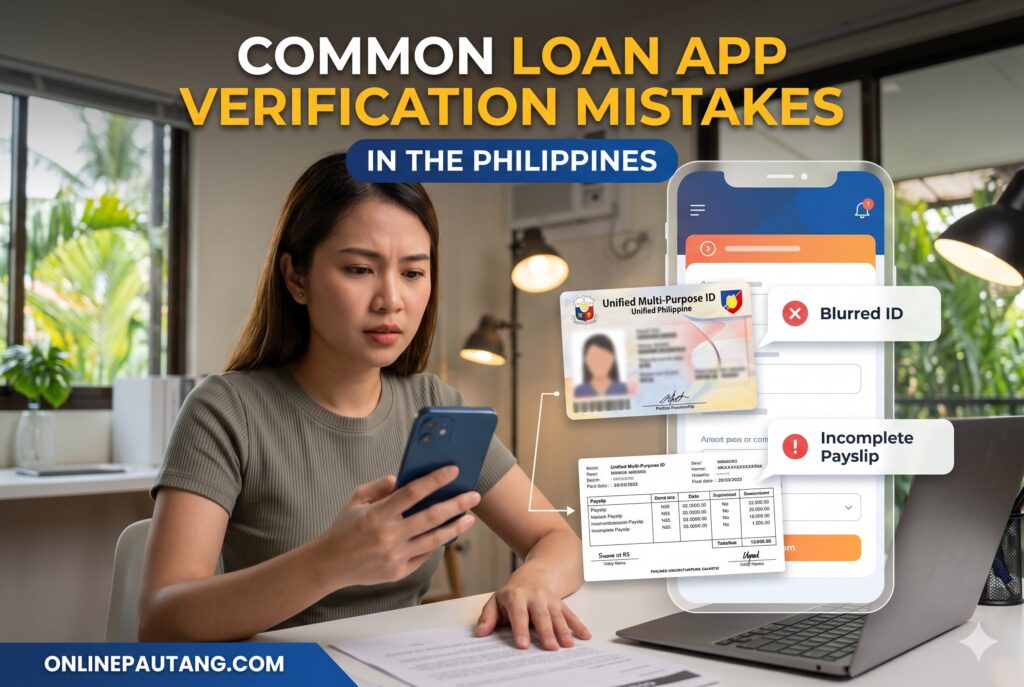
Common Loan App Verification Mistakes in the Philippines
📱 Does Changing Phones Affect Approval Chances?
Yes – sometimes significantly.
Frequent device switching may appear suspicious to automated systems.
Why Device Stability Builds Trust
Loan apps often associate trust with:
- Stable device usage
- Consistent GPS behavior
- Long-term phone activity
- Predictable login history
Changing phones repeatedly can resemble:
- Account takeovers
- Fraud attempts
- Synthetic identities
This becomes more problematic when combined with:
- New SIM cards
- Fresh email accounts
- Multiple rejected applications
Shared Devices Create Risk
In the Philippines, many households share devices.
However, if several rejected borrowers previously used the same phone, the device itself may carry elevated risk signals.
Some systems analyze:
- Prior application history
- Delinquency associations
- Suspicious borrowing clusters
This does not always mean automatic rejection, but approval probability can decrease.
💸 Why “Loan Apps With Minimal Requirements” Still Reject Borrowers
Many borrowers assume that loan apps with minimal requirements automatically accept low-document applications.
In reality, fewer document requirements usually mean:
- Heavier reliance on automation
- Stronger behavioral analytics
- More aggressive fraud prevention
- Faster algorithmic screening
Instead of asking for many papers, apps compensate by analyzing digital behavior deeply.
Minimal Documents = More Data Intelligence
Apps may evaluate:
- Typing behavior
- Application completion speed
- Phone sensor activity
- GPS consistency
- Contact list trust signals
- Employment plausibility
This allows lenders to approve some borrowers quickly while filtering others automatically.
Gig Workers and Freelancers Face Different Challenges
Freelancers, riders, resellers, and online sellers often face rejection because income patterns appear irregular.
Risk engines prefer:
- Stable cash flow
- Recurring e-wallet activity
- Consistent payroll patterns
- Repeat transaction history
Applicants without formal employment are not automatically rejected, but they often need:
- Cleaner application consistency
- Stable mobile usage
- Stronger digital trust indicators
⏳ Reapplying Too Quickly Can Hurt Your Chances
Many borrowers panic after rejection and immediately submit another application.
This can worsen risk scoring.
Why Immediate Reapplication Looks Risky
Automated systems may interpret repeated attempts as:
- Desperation
- Synthetic account behavior
- Fraud retries
- Identity manipulation attempts
Especially risky actions include:
- Changing details after rejection
- Using another device immediately
- Switching SIM cards
- Creating new email accounts
Better Reapplication Timing
A safer approach usually includes:
- Reviewing inconsistencies
- Waiting several days
- Using stable internet
- Retaking clearer selfies
- Verifying contact accuracy
- Reducing simultaneous applications
The goal is to improve borrower trust indicators before submitting again.

Safe Reapplication Checklist for Philippine Loan Apps
🔍 Signs Your Application Triggered Fraud Detection Systems
Many borrowers never realize their application was flagged as suspicious.
Common warning signs include:
- Instant rejection within seconds
- No manual review notice
- OTP verification loops
- Repeated selfie failures
- “Application cannot proceed” messages
- Permanent account restrictions
These usually indicate backend fraud mitigation behavior rather than normal underwriting review.
Common Fraud Patterns Apps Monitor
Digital lenders commonly monitor:
| Risk Signal | Why It Matters |
|---|---|
| Multiple applications in short periods | Suggests loan stacking |
| Mismatched IDs and selfies | Possible identity fraud |
| Emulator or rooted phones | Security concerns |
| Fake employment details | Repayment uncertainty |
| Shared device patterns | Linked risk exposure |
| Incomplete metadata | Possible upload manipulation |
🛡️ How to Improve Approval Chances After Rejection
Improving approval odds requires more than resubmitting documents.
Strengthen Digital Identity Consistency
Try to maintain:
- One primary device
- One active SIM
- Stable email usage
- Accurate personal details
- Consistent addresses
Trust continuity matters heavily in digital lending ecosystems.
Improve Verification Quality
Before applying again:
- Use bright natural lighting
- Avoid blurry ID photos
- Remove image filters
- Use stable internet
- Keep camera lenses clean
- Upload original documents directly
These small changes can significantly reduce eKYC failures.
Reduce Risky Borrowing Behavior
Avoid:
- Applying to many apps simultaneously
- Repeated same-day reapplications
- Using borrowed devices
- Editing uploaded documents
Risk engines reward stable and predictable borrower behavior.
🤔 Why Was I Rejected After Uploading Complete IDs?
Complete IDs alone no longer guarantee approval.
Loan apps evaluate:
- Behavioral consistency
- Device history
- Telecom reliability
- Fraud risk probability
- Income plausibility
- eKYC success
- Metadata integrity
A borrower may have valid documents but still fail automated trust checks.
📉 Can Too Many Applications Reduce Approval Chances?
Yes.
Submitting many applications quickly can:
- Increase fraud suspicion
- Suggest financial distress
- Trigger duplicate application systems
- Lower trust scores across lenders
Spacing out applications is usually safer.
📲 Does Changing Phones Affect Loan App Approval?
Yes.
Changing phones frequently may:
- Interrupt device trust history
- Trigger security reviews
- Resemble synthetic identity behavior
Stable device usage generally improves trust scoring.
🇵🇭 Philippine Digital Lending Systems Are Becoming More Aggressive
As fraud attempts increase, many Philippine lenders are strengthening:
- Automated risk scoring
- Device intelligence systems
- Telecom verification
- Behavioral analytics
- Identity authentication
This means borrowers must pay closer attention to digital consistency, not just document submission.
Apps regulated under evolving BSP-aligned fintech compliance practices are increasingly prioritizing:
- Safer onboarding
- Fraud prevention
- Borrower identity integrity
- Responsible lending controls
Because of this, even legitimate borrowers can face rejection if their application signals appear inconsistent or incomplete digitally.
Conclusion
Getting rejected by an easy approval loan app in the Philippines does not always mean you lack income or qualifications. Modern lending systems evaluate far more than uploaded IDs. Device fingerprinting, telecom verification, eKYC quality, application behavior, metadata consistency, and fraud detection systems now play a major role in automated approvals.
Borrowers who improve digital consistency, avoid mass applications, use stable devices, and submit cleaner verification uploads usually increase their future approval chances significantly. Responsible borrowing also means applying carefully, protecting your identity, and avoiding shortcuts that can trigger risk systems.
Instead of rushing into repeated applications, focus on building stronger trust indicators before trying again.
Disclaimer:This article contains affiliate links. We may earn a small commission if you apply for a loan through our links, at no extra cost to you. The information provided is for educational purposes only and does not constitute professional financial advice. Please borrow responsibly.
Last Updated on May 16, 2026 by Elena Reyes

Pingback: 🛡️ Safe Easy Approval Loan Apps Philippines: How to Spot Legit Lending Apps Before You Apply - Online Pautang Philippines
Pingback: 🚀 Easy Approval Loan Apps Philippines for Fast Online Cash Access (What Actually Improves Approval Chances?) - Online Pautang Philippines