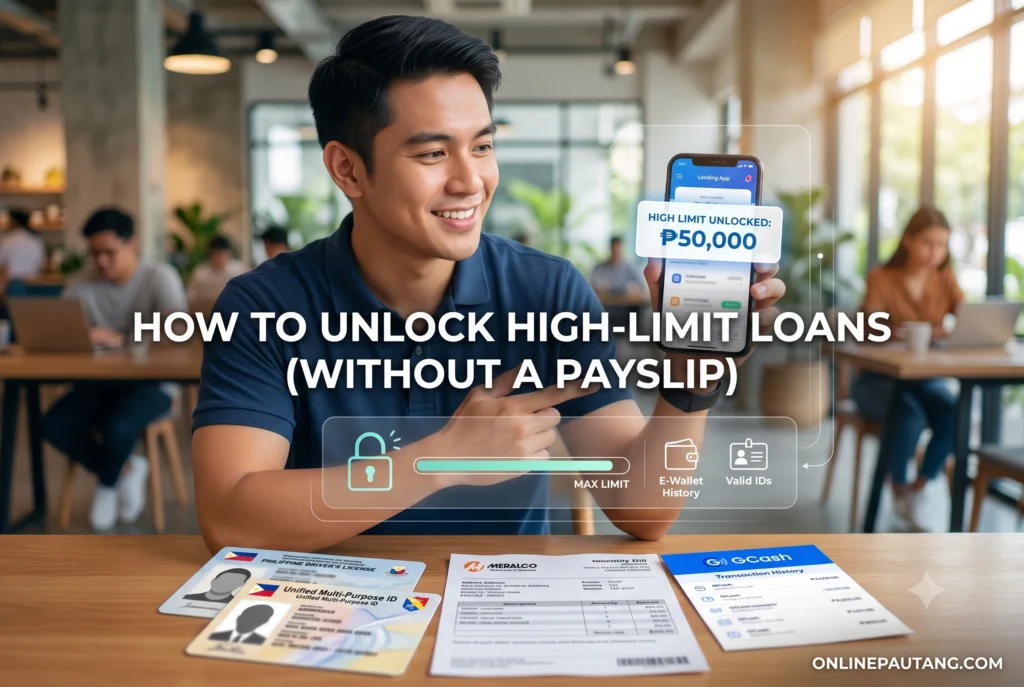
It is incredibly frustrating when you find yourself in a financial pinch. Let us say you run a small sari-sari store and desperately need PHP 20,000 to restock inventory ahead of a major holiday weekend. You see an advertisement online promising “up to PHP 50,000 in 5 minutes, no payslip required.” You download the app, go through the tedious identity verification process, and finally wait for your approval. The screen loads, and you are offered a meager PHP 3,000.
I see this happen constantly. Over the last decade of analyzing the Philippine digital lending market, I have spoken with thousands of borrowers who feel cheated by these advertisements. The harsh reality of finding a high limit loan app no payslip philippines is that the ads are selling you the maximum potential limit, not the starting limit. No legitimate financial institution will hand out PHP 50,000 to a complete stranger on day one without solid, verifiable proof of traditional income.
However, you are not out of luck. The digital lending system is entirely a game of trust, governed by complex behavioral algorithms. You can absolutely reach that PHP 50,000 ceiling without a traditional ITR (Income Tax Return) or certificate of employment, provided you know exactly how to train the lender’s system to trust you. Let us break down how you can ethically and systematically hack these algorithms to expand your purchasing power.
Summary:
To reach high credit limits without a payslip, you must treat your first micro-loan as an algorithmic test. Legitimate digital lenders use your first PHP 2,000 to PHP 3,000 approval to monitor your payment behavior, app usage, and digital footprint. By paying consistently on time, linking alternative data sources like e-wallets, and avoiding late penalties, you trigger automated trust signals. Within three to four billing cycles, safe SEC-verified apps will systematically raise your borrowing ceiling to PHP 20,000 or even PHP 50,000, replacing traditional income documents with your verified digital repayment history.
Quick Reference: Lending Tiers and Limit Upgrades
| Lending Platform | Typical First-Time Approval | Maximum Algorithmic Limit | Average Time to Reach PHP 20k+ | Fast-Track Behavioral Requirement |
| Tala | PHP 1,000 – PHP 2,000 | Up to PHP 25,000 | 4 to 6 successful cycles | Consistent on-time payments, no extensions. |
| BillEase | PHP 2,000 – PHP 4,000 | Up to PHP 40,000+ | 3 to 5 successful cycles | Linking active Lazada/Shopee accounts with purchase history. |
| JuanHand | PHP 1,500 – PHP 2,500 | Up to PHP 50,000 | 5 to 7 successful cycles | Perfect repayment record, full access to device data permissions. |
| Tonik (Quick Loan) | PHP 5,000 | Up to PHP 50,000 | 2 to 3 successful cycles | Maintaining an active Tonik Stash and transacting via their debit card. |
Why Won’t Lending Apps Approve PHP 50,000 on Your First Try?
No legitimate lending app will approve a PHP 50,000 loan for a first-time borrower without a payslip. To get high limits, you must complete an initial “probationary” loan of PHP 1,000 to PHP 3,000, allowing the app’s algorithm to analyze your repayment behavior and build a risk profile.
The absence of traditional income documents completely removes a lender’s safety net. If a traditional bank loans you money, they base their risk assessment on your guaranteed monthly salary. Digital lenders operating without payslips are taking a massive blind risk on you. When they approve you for a small amount initially, they are not insulting your earning capacity; they are executing a standard risk mitigation protocol. They cap their potential loss while giving you a chance to prove your financial integrity.

How Do Lending Algorithms Build Trust Without Traditional Income Documents?
Lending algorithms build trust by analyzing your digital footprint, device metadata, e-wallet transaction volume, and most importantly, your repayment consistency on micro-loans. These alternative data points replace the traditional payslip to generate a dynamic, behavioral credit score.
When you install a lending application, you grant it permissions to scan specific data points on your phone (strictly adhering to the 2026 National Privacy Commission guidelines). The algorithm looks for stability. Do you use the same GCash number for transactions? Do you pay utility bills through your e-wallet? Are you topping up mobile load regularly?
When our team tested various platforms, we noticed that gig-economy workers – like freelance graphic designers or online sellers – often score higher if they link bank accounts or e-wallets that show a high volume of small, incoming transfers. The algorithm flags this as “active cash flow,” which heavily compensates for the lack of a formal corporate salary.
What Happens If You Only Get Approved for PHP 3,000?
If you are only approved for PHP 3,000, you must view this as a low-risk trial run. Accepting and successfully repaying this small amount on time directly signals the algorithm to unlock your next lending tier, usually doubling your limit on the next cycle.
Do not reject the small offer out of frustration if you genuinely need access to larger capital later. This first loan is essentially the “entry fee” into the platform’s gamified lending ecosystem. When a borrower fully repays that initial amount, the backend system automatically recalculates their risk tier. The friction is temporary. Consider it a necessary stepping stone to bypass standard no-document loan limits.
Which Legitimate Platforms Offer the Highest Limits Over Time?
Platforms like BillEase, Tala, and Tonik Bank offer the most reliable pathways to credit limits of PHP 25,000 to PHP 50,000. These SEC-registered platforms use tiered behavioral scoring, rewarding loyal borrowers with significant limit increases after consecutive on-time payments.
You must be highly selective about where you invest your repayment history. Building a perfect record on an illegal, unregistered app will not yield higher limits; it will only subject you to harassment. Stick strictly to platforms officially recognized by the Securities and Exchange Commission (SEC) and the Bangko Sentral ng Pilipinas (BSP).
How Does Tala Manage Its Tiered Credit Upgrades?
Tala upgrades limits progressively based on exact repayment timing, app engagement, and avoiding loan extensions. First-time users typically start around PHP 1,000 to PHP 2,000, unlocking increments up to PHP 25,000 after four to six flawlessly paid cycles.
In our experience monitoring Tala’s operational flows, their eKYC (Electronic Know Your Customer) system is highly sensitive. If you upload a UMID card with a faded border, the system kicks your application to manual review, which can delay disbursement by 24 hours. However, once you are in the system, Tala is incredibly transparent about limit growth. The trick with Tala is consistency. They prefer borrowers who pay exactly on their selected due date, rather than those who constantly shift their repayment schedules or rely on extension features.
What Is the Level-Up Process for BillEase?
BillEase requires borrowers to link active e-commerce accounts and maintain a perfect repayment history to unlock limits exceeding PHP 40,000. Because they operate primarily as a Buy Now, Pay Later (BNPL) service, your purchasing behavior on platforms like Lazada directly influences your cash loan ceiling.
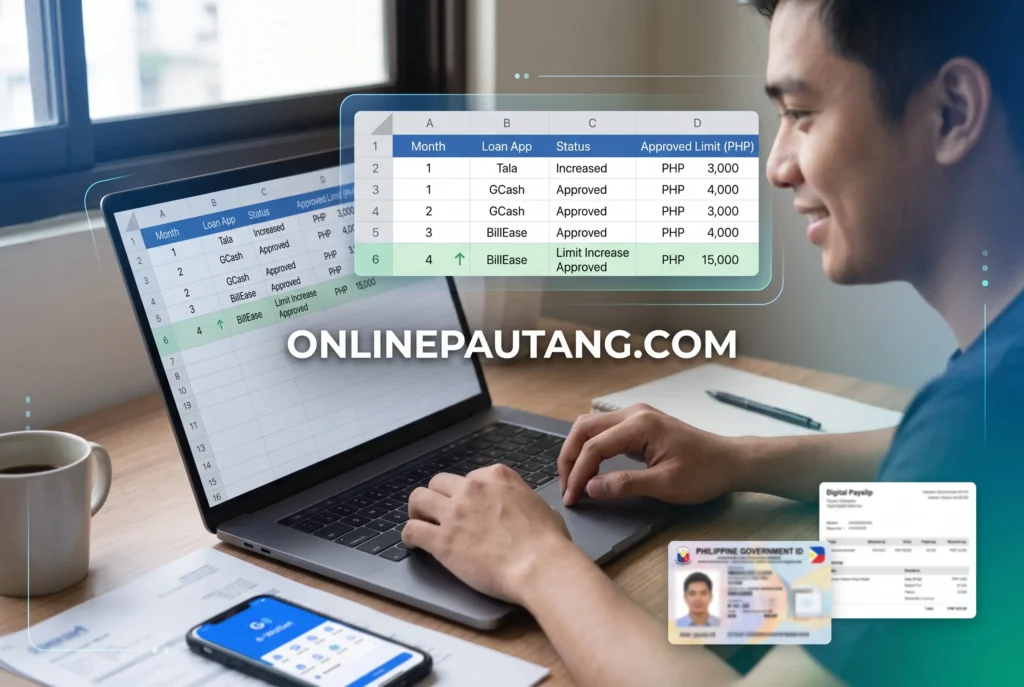
BillEase has one of the most sophisticated alternative scoring models in the Philippines. During a recent hands-on test, we observed that an applicant with no payslip, but a three-year history of successfully receiving and paying for Shopee Cash-on-Delivery (COD) orders, achieved an initial limit of PHP 4,000. By utilizing the BNPL feature for small purchases and paying them off, the user’s limit was bumped to PHP 15,000 in just three months. They want to see that you are an active, responsible consumer in the digital economy.
How Can You Increase Your Loan Limit Faster Without a Payslip?
You can fast-track your limit increases by keeping your linked e-wallets active, avoiding early repayment anomalies, and maintaining a stable device profile. Consistent, predictable financial behavior feeds the algorithm the stability metrics it needs to bypass traditional income verification.
Earning the algorithm’s trust requires a bit of strategic behavior. It is not just about paying the money back; it is about how and when you pay it back. Lenders are looking for patterns that suggest you are a financially stable individual, even if your income is informal.
Do Early Repayments Actually Help Your Credit Score?
Paying your loan exactly on the due date, or just one day prior, is far better for limit increases than paying it off a few days after borrowing. Lenders make their money on interest; if you consistently pay off a 30-day loan in three days, the algorithm flags you as unprofitable and may freeze your limit.
This is a massive misconception among Filipino borrowers. Many believe that if they borrow PHP 5,000 today and pay it back tomorrow, the app will instantly trust them with PHP 20,000. From an operational banking perspective, a loan that is paid off immediately yields minimal interest revenue for the lender. The algorithm wants to see that you can manage debt over the agreed-upon term length. Show them you can hold onto the funds, utilize them for your business or personal needs, and settle the obligation responsibly when it is actually due.
Which Alternative Data Points Boost Your Approval Odds?
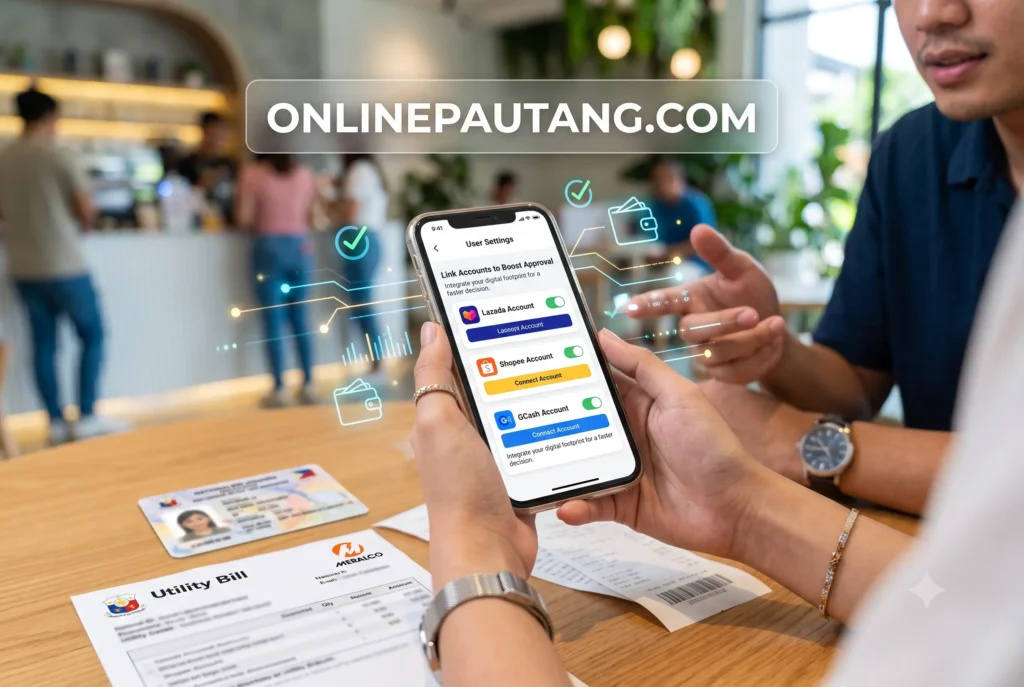
Linking well-aged e-commerce accounts, maintaining consistent device usage without frequent SIM card changes, and keeping a steady minimum balance in your linked e-wallets significantly boost your algorithmic profile. These factors prove your identity and financial stability.
Digital lenders despise volatility. If you frequently change your mobile number, wipe your phone’s memory, or swap SIM cards, you trigger high-risk fraud alerts. Algorithms are designed to flag “burner phones.” By simply keeping the same phone number, leaving your app installed between loan cycles, and ensuring your linked GCash or Maya accounts see regular utility payments, you are silently building an incredibly strong credit profile.
What Are the Real Dangers of Chasing High-Limit Offers?
Chasing instant high limits often leads desperate borrowers straight into the hands of predatory, unregistered loan sharks who use illegal debt collection practices. If an app guarantees a massive limit with zero checks, it is a trap designed to harvest your contacts and extort you.
When you are stressed about money, it is easy to let your guard down. If you see an app offering PHP 50,000 immediately to first-time users, run the other way. These are usually unregistered entities operating outside the BSP’s mandated interest rate caps (which currently cap nominal interest rates for micro-loans at 3% per month). They will approve a “PHP 50,000” loan, but deduct massive hidden processing fees, disbursing only a fraction of the money, and demanding full repayment in seven days. If you default, they will text your entire contact list. Stick exclusively to platforms that mandate a clear, gradual leveling-up process. The friction is a sign of a legitimate business.
Protect your peace of mind. Building a credit limit safely takes a few months, but it ensures you remain within a regulated, fair financial system that respects your rights as a consumer. Focus on the long game. Pay your small initial loans diligently, let the algorithm do its work, and watch your purchasing power expand naturally.
References
- Securities and Exchange Commission Philippines (SEC)Organization: Securities and Exchange CommissionResource: List of Registered Online Lending PlatformsURL: https://www.sec.gov.ph/lending-companies-and-financing-companies-2/list-of-registered-online-lending-platforms/
- Bangko Sentral ng Pilipinas (BSP)Organization: Bangko Sentral ng PilipinasResource: Circular on Interest Rate Ceilings for Small Value LoansURL: https://www.bsp.gov.ph/Regulations/Issuances/2022/c1133.pdf
- National Privacy Commission (NPC)Organization: National Privacy CommissionResource: Advisory on Data Privacy for Online LendersURL: https://www.privacy.gov.ph/2019/10/npc-circular-19-01-guidelines-on-the-processing-of-personal-data-for-loan-related-transactions/
Disclaimer:This article contains affiliate links. We may earn a small commission if you apply for a loan through our links, at no extra cost to you. The information provided is for educational purposes only and does not constitute professional financial advice. Please borrow responsibly.
Last Updated on August 10, 2026 by Elena Reyes
