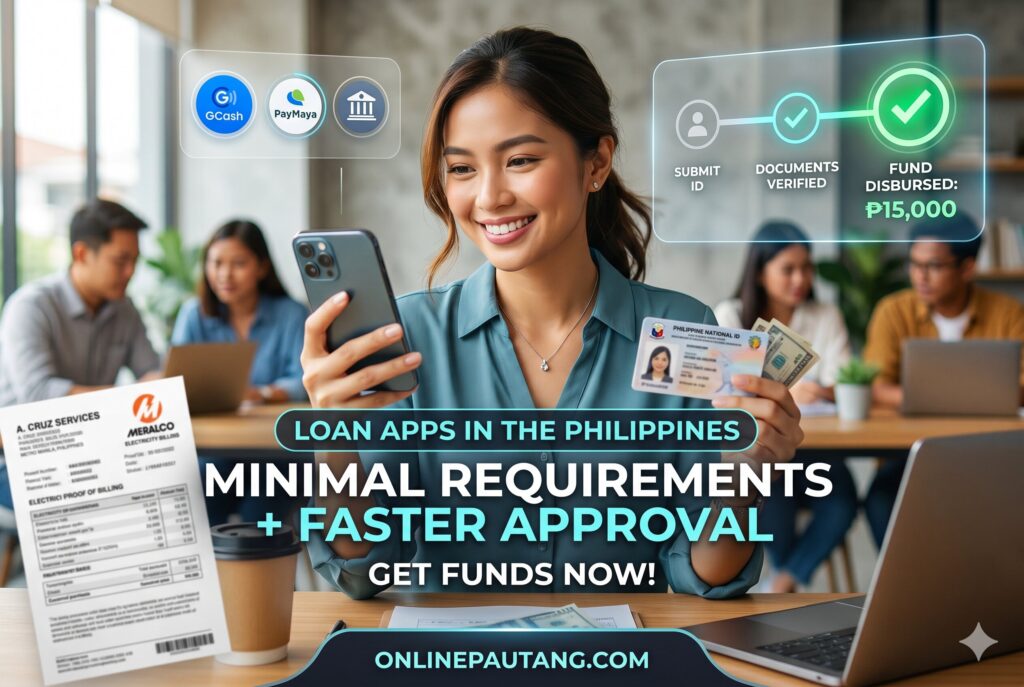
Many Filipino borrowers now prefer loan apps that require fewer documents and provide quicker approval decisions. Instead of demanding traditional paperwork such as extensive bank statements, multiple IDs, or lengthy employment certificates, some digital lenders use lightweight digital verification methods powered by eKYC systems, mobile activity signals, and identity matching tools.
These systems help lenders evaluate applicants faster while reducing onboarding friction for workers in the gig economy, freelancers, prepaid SIM users, and people without formal employment records. Borrowers who prepare stronger digital identity signals – such as verified e-wallets, active mobile numbers, and consistent account information – often improve their approval chances even when applying with minimal paperwork.
Summary:
Loan apps minimal requirements philippines searches usually focus on lenders that accept lightweight digital verification instead of traditional documents. Many apps now approve borrowers using one valid ID, selfie verification, active mobile numbers, e-wallet activity, and simplified eKYC systems. Applicants without payslips, bank statements, or formal employment may still qualify if they show stable mobile usage, verified GCash or Maya accounts, consistent personal details, and active transaction behavior. Fast approval requirements often prioritize identity legitimacy, fraud prevention, and digital activity patterns rather than thick paperwork. Preparing a strong identity setup before applying can improve approval outcomes while reducing verification delays.
Why Some Philippine Loan Apps Require Fewer Documents 📱
Traditional lending relied heavily on physical documents because banks needed manual verification. Digital lenders operate differently. Many fintech platforms now use automated onboarding systems designed for faster risk assessment.
Instead of reviewing thick document folders, some apps analyze:
- Identity consistency
- Mobile number history
- Device behavior
- e-wallet activity
- Digital transaction patterns
- Selfie-to-ID facial matching
- SIM registration status
- Geo-location consistency
- App usage behavior
This shift created a category commonly associated with minimal requirements loan apps.
The Rise of eKYC Systems in Philippine Lending
Electronic Know Your Customer (eKYC) systems allow lenders to verify identity digitally. These systems became more common as fintech adoption expanded across the Philippines.
Many BSP-aligned digital lenders now integrate:
- OCR scanning for IDs
- Facial recognition
- Liveness detection
- Mobile number verification
- Database cross-checking
- Fraud screening systems
A borrower may complete onboarding within minutes if the verification signals appear clean and consistent.
Commonly accepted IDs include:
- PhilSys ID
- UMID
- Driver’s License
- Passport
- Postal ID
- PRC ID
The increasing acceptance of the PhilSys ID is especially important because many borrowers previously lacked formal banking documents but could now establish identity through national digital identity systems.
Why Lightweight Verification Matters to Borrowers
Low-document approval systems help applicants who may struggle with traditional paperwork requirements, including:
- Freelancers
- Informal workers
- Delivery riders
- Online sellers
- Gig workers
- Small market vendors
- Commission-based earners
Many Filipinos earn income regularly but cannot easily provide:
- Payslips
- COE documents
- ITR records
- Formal payroll histories
Digital lenders compensate by evaluating alternative verification signals instead.
What Minimal-Requirement Loan Apps Usually Ask For ✔️
Most lightweight approval systems still require identity validation. “Minimal requirements” does not mean “no verification.”
Instead, it usually means:
- Fewer documents
- Faster onboarding
- Simplified digital checks
- Reduced manual review
Basic Requirements Often Accepted
Here are the most common fast approval requirements used by digital loan apps:
| Requirement | Why It Matters |
|---|---|
| One valid ID | Confirms identity |
| Active mobile number | Helps risk scoring |
| Selfie verification | Prevents fraud |
| Stable device usage | Detects suspicious activity |
| e-wallet account | Shows transaction behavior |
| Personal information | Used for consistency checks |
Some apps offering no payslip approval workflows rely more heavily on behavioral verification than employer documentation.
IDs Commonly Accepted by Loan Apps
Apps with simplified onboarding frequently prioritize IDs that are easy to authenticate digitally.
These include:
- PhilSys ID
- UMID
- Driver’s License
- National ID digital version
- Passport
Older paper-based IDs sometimes fail automated scanning systems because of image quality or outdated formatting.
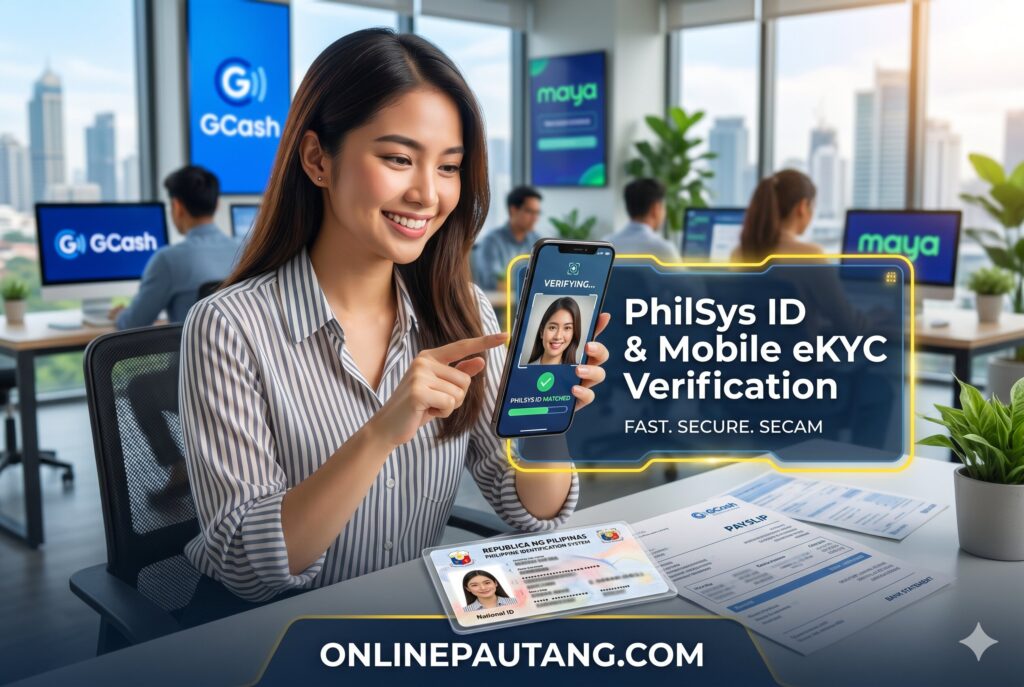
PhilSys ID and Mobile eKYC Verification Process (onlinepautang.com)
How Mobile Activity Affects Approval Decisions 📶
One of the least discussed parts of fast digital lending is mobile metadata scoring.
Some fintech systems analyze behavioral patterns linked to the applicant’s device and mobile activity.
This may include:
- SIM age
- Device consistency
- App installation history
- Location stability
- Contactability
- Account activity frequency
Why Prepaid SIM Users Need Stronger Verification Signals
Prepaid SIM users are common in the Philippines. However, newly activated numbers may sometimes trigger additional risk checks.
Lenders generally prefer:
- Longer-active mobile numbers
- Consistent usage behavior
- Verified SIM registration
- Stable communication patterns
Applicants who frequently change numbers may experience slower verification or additional review.
Mobile Banking History Can Strengthen Approval
Even without traditional bank statements, active e-wallet behavior can improve trust signals.
Examples include:
- GCash cash-in activity
- Maya wallet usage
- Digital bill payments
- QR payment history
- Remittance transactions
A delivery rider using GCash daily for customer collections may appear more verifiable than someone with no transaction footprint at all.
This is one reason some apps offering lightweight verification can still approve borrowers with informal income sources.
Can You Apply Without Payslips or Bank Statements?
Yes, some digital lenders allow applications without traditional income documents. However, approval depends on alternative proof signals.
What Replaces Traditional Documents?
Instead of payslips, lenders may review:
- e-wallet cash flow
- Mobile activity
- Consistent identity records
- Device trust indicators
- Transaction frequency
- Account verification levels
Borrowers applying through no payslip approval systems often succeed when their digital identity appears stable and authentic.
Why Some Borrowers Still Get Rejected
Minimal documentation does not guarantee approval.
Common rejection triggers include:
- Blurry ID uploads
- Mismatched personal information
- Recently activated SIM cards
- Fake-looking selfies
- Multiple devices used during application
- Suspicious location changes
- Inconsistent contact details
Automated fraud systems can flag these patterns immediately.
Which Applicants Usually Benefit Most From Fast-Document Approval?
Certain borrower profiles fit lightweight approval systems more naturally.
Gig Economy Workers
Freelancers, riders, and online sellers often lack formal payroll records but maintain active digital financial activity.
Examples include:
- Food delivery riders receiving wallet payouts
- TikTok sellers using digital payments
- Freelance designers accepting e-wallet transfers
- Marketplace resellers using QR transactions
These applicants may qualify through alternative verification methods even without traditional employment certificates.
Applicants Without Bank Accounts
Some borrowers operate entirely through e-wallet ecosystems.
Certain lenders accommodate applicants using:
- GCash
- Maya
- Coins.ph
- Remittance channels
However, verified wallet accounts generally perform better during automated onboarding.
Informal Workers With Stable Identity Signals
An informal worker without a COE may still improve approval probability if they have:
- Verified PhilSys ID
- Consistent mobile number
- Stable address records
- Active e-wallet transactions
- Clear selfie verification
- Properly registered SIM
The goal of modern onboarding is often friction reduction while still maintaining fraud prevention controls.
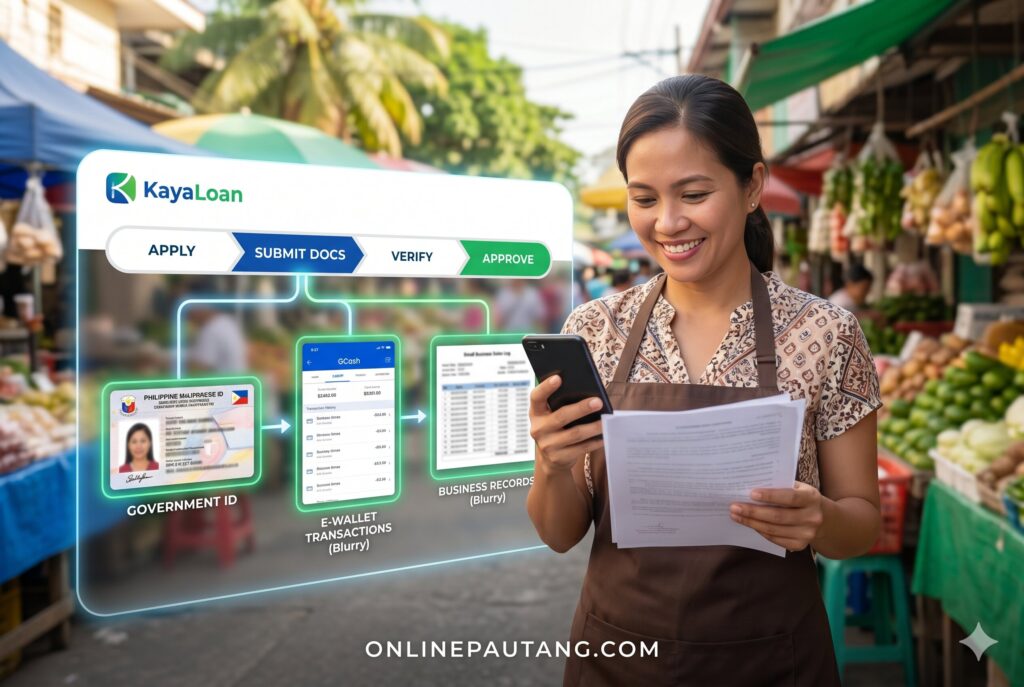
Mobile Loan App Approval Workflow for Informal Workers (onlinepautang.com)
How Selfie Verification Works in Modern Loan Apps 🤳
Many Philippine loan apps now rely heavily on facial verification systems.
These systems compare:
- ID photo
- Live selfie capture
- Facial movement
- Lighting consistency
- Image authenticity
Why Selfie Quality Matters
Poor selfie submissions commonly delay approvals.
Best practices include:
- Use bright lighting
- Avoid hats or masks
- Keep camera stable
- Match your ID appearance
- Avoid heavy filters
Automated systems look for natural facial alignment and liveness indicators.
Is Selfie Verification Enough?
Usually not by itself.
Selfie checks are typically combined with:
- ID validation
- Mobile verification
- Device fingerprinting
- Risk scoring
- Contact verification
Some apps may approve using only one valid ID plus selfie verification if other digital signals appear trustworthy.
Borrower Qualification Matrix for Minimal Requirement Loan Apps
The table below shows how lightweight approval systems may assess different applicant profiles.
| Borrower Type | Traditional Documents | Digital Signals | Approval Potential |
|---|---|---|---|
| Employed worker with payroll | Strong | Moderate | High |
| Freelancer using GCash | Limited | Strong | Moderate to High |
| Delivery rider with active wallet | Limited | Strong | Moderate to High |
| Applicant with new SIM | Limited | Weak | Lower |
| No bank account but verified identity | Limited | Moderate | Moderate |
| Multiple inconsistent details | Weak | Weak | Lower |
This explains why fast approval requirements often focus more on verification quality than document quantity.
What Loan Apps Actually Want to See 🛡️
Lenders prioritize one thing above all: confidence that the borrower is real and reachable.
Even apps advertising easy approval still evaluate risk.
Strong Identity Consistency
Applicants improve credibility when:
- Name matches all accounts
- Address records remain consistent
- Mobile number is active long-term
- IDs are readable
- Selfies appear legitimate
Reduced Fraud Risk
Fintech lenders actively fight:
- Identity theft
- Synthetic accounts
- Fake IDs
- Multi-account abuse
- Device manipulation
This explains why some borrowers with fewer documents still get approved while others with many documents fail verification.
Contact Stability
Apps value borrowers who are easier to contact.
Signals include:
- Stable SIM activity
- Reachable phone numbers
- Active messaging apps
- Consistent login patterns
These factors support the logic behind many minimal requirements loan apps.
Fast Approval Does Not Mean Guaranteed Approval ⚠️
Borrowers often misunderstand marketing phrases like:
- “Instant approval”
- “Easy loan”
- “Minimal requirements”
In practice, lenders still evaluate:
- Fraud probability
- Repayment behavior indicators
- Identity confidence
- Digital consistency
Automated systems simply perform these checks faster.
Why Approval Speed Varies
Approval may slow down when:
- ID images fail OCR reading
- Facial recognition fails
- Device risk scores increase
- Manual review becomes necessary
- Contact details appear suspicious
A borrower with clean verification signals may receive approval in minutes, while another applicant may face additional checks despite submitting more paperwork.
Practical Ways to Improve Approval With Fewer Documents 🚀
Borrowers using lightweight verification systems should focus on digital credibility.
Before Applying
Improve your identity setup by:
- Registering your SIM properly
- Verifying your e-wallet account
- Updating inconsistent account details
- Using a stable mobile number
- Preparing a clean valid ID
- Using accurate personal information
During Application
Avoid behaviors that trigger risk systems:
- Switching devices repeatedly
- Using edited ID photos
- Applying on unstable internet connections
- Submitting blurry selfies
- Entering inconsistent addresses
After Submission
Respond quickly if lenders request:
- Additional selfie verification
- Contact confirmation
- Secondary ID upload
- e-wallet verification
Fast responses can help avoid automated expiration or manual review delays.
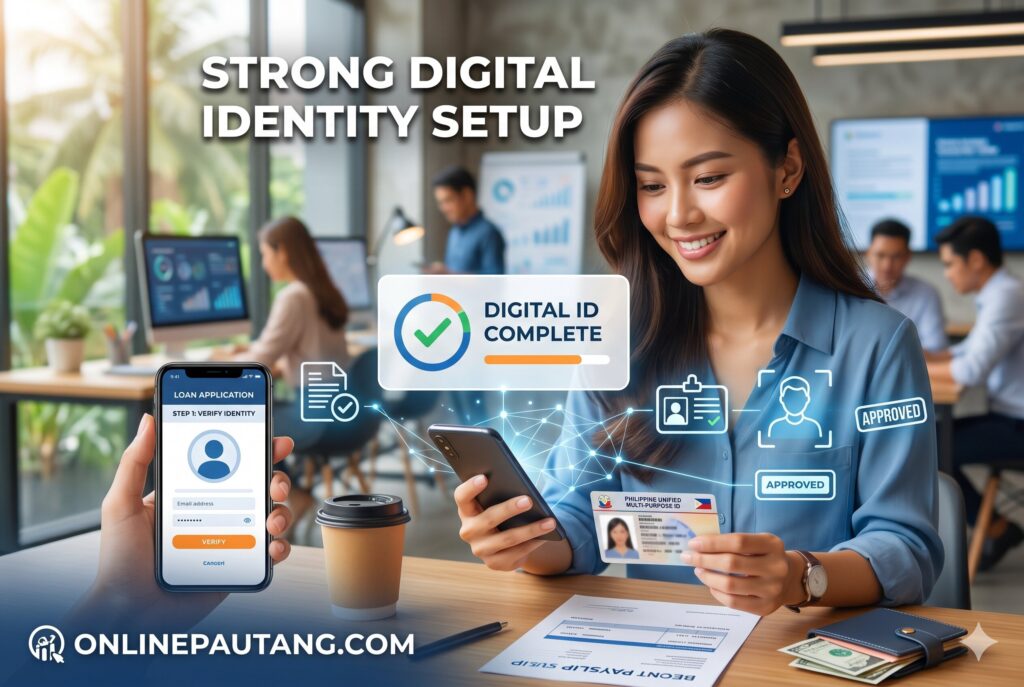
Strong Digital Identity Setup Before Loan App Application
Which Apps Need Only One Valid ID?
Some Philippine digital lenders allow onboarding using:
- One government-issued ID
- Selfie verification
- Active mobile number
However, approval still depends on broader digital verification checks.
Apps that promote low-document onboarding often still evaluate:
- Device legitimacy
- Mobile history
- Identity consistency
- Fraud indicators
Borrowers should read the app’s privacy policies and lending disclosures carefully before submitting sensitive information.
Can I Apply Without Bank Statements?
Yes. Several digital lenders now accept alternative verification instead of formal banking documents.
Possible substitutes include:
- Verified e-wallet activity
- Mobile transaction behavior
- Identity verification systems
- Digital payment history
Applicants using e-wallet ecosystems may still qualify if their activity appears stable and authentic.
Is Selfie Verification Enough for Approval?
Not completely.
Selfie verification is only one layer of digital identity validation.
Lenders usually combine:
- Facial verification
- ID matching
- Device checks
- SIM verification
- Behavioral scoring
A strong selfie helps, but approval decisions still depend on the total verification profile.
Borrower Safety and Responsible Lending Practices
Borrowers should stay cautious when using fast-approval apps.
Before applying:
- Check SEC registration status
- Review repayment terms
- Read privacy permissions carefully
- Avoid apps requesting excessive phone access
- Verify repayment schedules
- Avoid borrowing beyond repayment ability
Responsible borrowing matters even when onboarding feels simple and fast.
Legitimate fintech lenders typically explain:
- Interest calculations
- Due dates
- Collection practices
- Data usage policies
- Verification procedures
Transparency is an important trust signal in the Philippine digital lending ecosystem.
Conclusion
Loan apps with lighter onboarding systems have changed how many Filipinos access short-term financing. Instead of depending entirely on payslips, COEs, or formal banking documents, many platforms now evaluate identity strength through eKYC systems, mobile activity, verified e-wallet usage, and behavioral verification patterns.
For borrowers using minimal requirements loan apps, preparation still matters. A verified PhilSys ID, stable mobile number, active digital wallet, and accurate personal information can significantly improve approval outcomes even when paperwork is limited.
Fast approval systems are designed to reduce friction, not eliminate verification entirely. Borrowers who focus on strong digital identity setup, consistent information, and responsible borrowing habits are generally better positioned for smoother application experiences and safer lending relationships.
Disclaimer:This article contains affiliate links. We may earn a small commission if you apply for a loan through our links, at no extra cost to you. The information provided is for educational purposes only and does not constitute professional financial advice. Please borrow responsibly.
Last Updated on May 16, 2026 by Elena Reyes

Pingback: 🚫 Why Easy Approval Loan Apps Still Reject Applications in the Philippines (Even When You Upload Complete Requirements) - Online Pautang Philippines
Pingback: ✅ Easy Approval Loan Apps for First-Time Borrowers in the Philippines 🇵🇭📱 - Online Pautang Philippines