You are staring at your phone, heart pounding. A text message from an unknown number just threatened to dispatch the police and barangay officials to your house over a ₱2,000 loan that is exactly three days overdue. If you are experiencing this right now, take a breath. I have spent over a decade working inside the Philippine digital lending space, auditing collections operations and analyzing risk models. I know exactly how these third-party collection scripts are written, and I am telling you this: a massive portion of the threats you are reading are empty scare tactics designed to trigger panic.
Summary:The most common unpaid online loan Philippines consequences include compounding late penalties, credit blacklisting with the CIC, and aggressive collection calls. However, you cannot be imprisoned for simply failing to pay a civil debt, as protected by the 1987 Philippine Constitution. Harassment, public shaming, and threats of arrest from digital lending apps are strictly prohibited by the SEC and NPC.
Key Takeaways: Legal vs. Illegal Collection Actions
| Lender Action | Is This Legal? | Reality Check |
| Charging daily late fees | Yes (Subject to limits) | BSP Circular 1133 caps penalties for small loans. |
| Reporting you to the CIC | Yes | Legitimate lenders submit data to the national registry. |
| Texting your phonebook contacts | No | Violates National Privacy Commission (NPC) rules. |
| Filing a barangay blotter | Rare but possible | A barangay summons is for mediation, not an arrest. |
| Sending police to your home | No | Police do not enforce civil debt collection. |
Can the Police Arrest You for an Unpaid Online Loan App?
No, the Philippine National Police (PNP) cannot arrest you for an unpaid online loan. Police officers only intervene in criminal cases, and unpaid personal debt is classified as a civil liability, not a crime.
The fear of imprisonment is the primary weapon rogue collection agencies use against first-time borrowers. It is highly effective because most people do not understand the line between civil and criminal law. When an app sends a message claiming “a warrant of arrest is being drafted,” they are relying entirely on your lack of legal knowledge.
Does the Philippine Constitution Protect Borrowers from Jail?
Yes, Article III, Section 20 of the 1987 Philippine Constitution explicitly states that no person shall be imprisoned for debt or non-payment of a poll tax.
This constitutional guarantee means that if you simply lose your job, face a medical emergency, or mismanage your finances and cannot pay back your loan, the state will not put you behind bars. The lender’s only legal recourse is to file a civil case for collection of sum of money, which is typically handled in a Small Claims Court for amounts under ₱1,000,000.
In practice, filing a small claims case requires the lender to pay filing fees, send representatives, and spend time in mediation. For a small debt from first-time loan apps, lenders almost never pursue court action. It is mathematically cheaper for them to sell the bad debt to a third-party agency (TPA) for a fraction of the cost.
What is the Difference Between Simple Debt and Estafa?
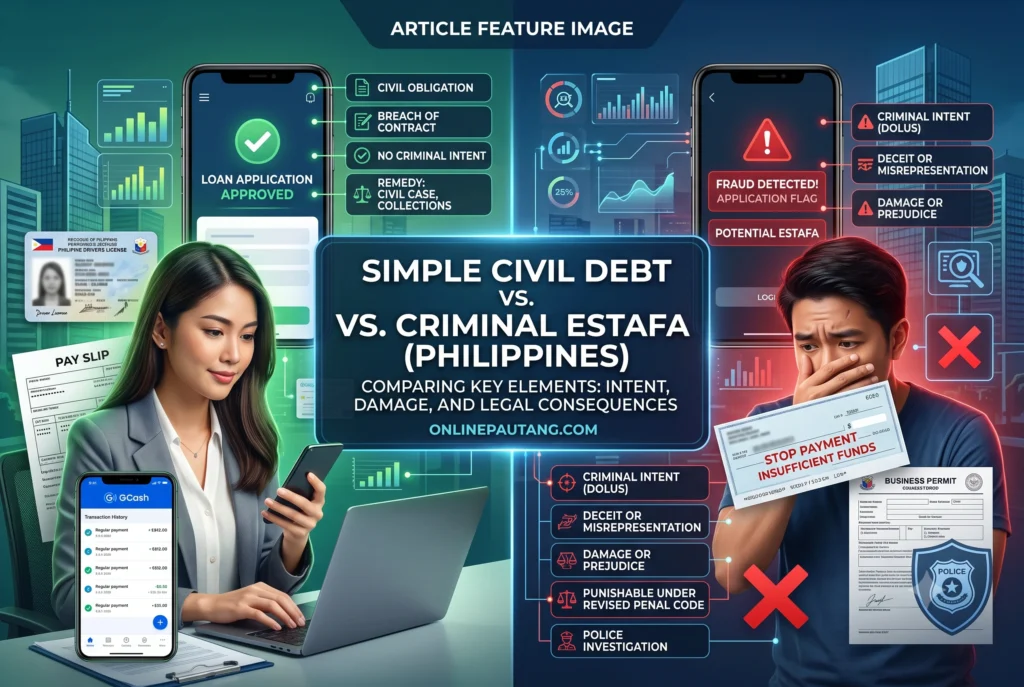
Simple debt is the inability to pay a loan due to financial hardship, which is not a crime. Estafa is a criminal offense involving deliberate fraud, such as using fake IDs to secure the loan.
Lenders often threaten to file an estafa (swindling) case against late borrowers. This is an intentional misrepresentation of the law. To prove estafa under Article 315 of the Revised Penal Code, the lender must prove deceit.
If you applied using your real name, real UMID or valid ID, and real address, but simply ran out of money to pay them back, there is zero deceit involved. You just defaulted on a contract. The only time a borrower crosses into criminal territory is if they fabricate employment documents, use someone else’s identity, or issue a bouncing check (Batas Pambansa Blg. 22). App-based lending rarely involves checks, making BP 22 inapplicable.
What Are the Actual Unpaid Online Loan Philippines Consequences?
The real consequences of an unpaid online loan include rapidly compounding interest, aggressive collection tactics, and severe damage to your national credit score, which affects future borrowing.
While you will not go to jail, ignoring the debt does not make it disappear. Legitimate fintech lenders operate within a highly regulated environment, and they have legal mechanisms to penalize defaults.
How Do Late Fees and Penalties Grow Under BSP Rules?
Under BSP Circular No. 1133, lending companies can only charge a maximum of 5% per month for late penalties on unsecured, short-term, small-value loans.
Before 2022, unregulated lending apps would charge 10% daily interest, turning a ₱5,000 loan into ₱15,000 in a matter of weeks. The Bangko Sentral ng Pilipinas (BSP) intervened to stop this predatory practice.
For loans up to ₱10,000 with tenors of up to four months, the strict ceilings are:
- Nominal interest rate: 15% per month (or 0.5% per day).
- Penalty rate: 5% per month on the outstanding scheduled amount due.
If an app is demanding thousands of pesos in penalties just days after your due date, they are operating illegally. Knowing this math is a powerful negotiation tool. You can explicitly tell a collector that you will only pay the principal plus the BSP-mandated interest cap.
Will an Unpaid App Loan Ruin Your NBI Clearance?
No, an unpaid online loan will not appear on your NBI Clearance or Police Clearance because civil debts are not criminal offenses.
An NBI Clearance exclusively checks for pending criminal cases or convictions. Since simple debt is civil, your clearance will come back clean. You can still apply for jobs, travel abroad, and secure government documents without any issues. If a collector threatens to “block your NBI renewal,” they are lying.
How Does Credit Blacklisting Work for First-Time Borrowers?
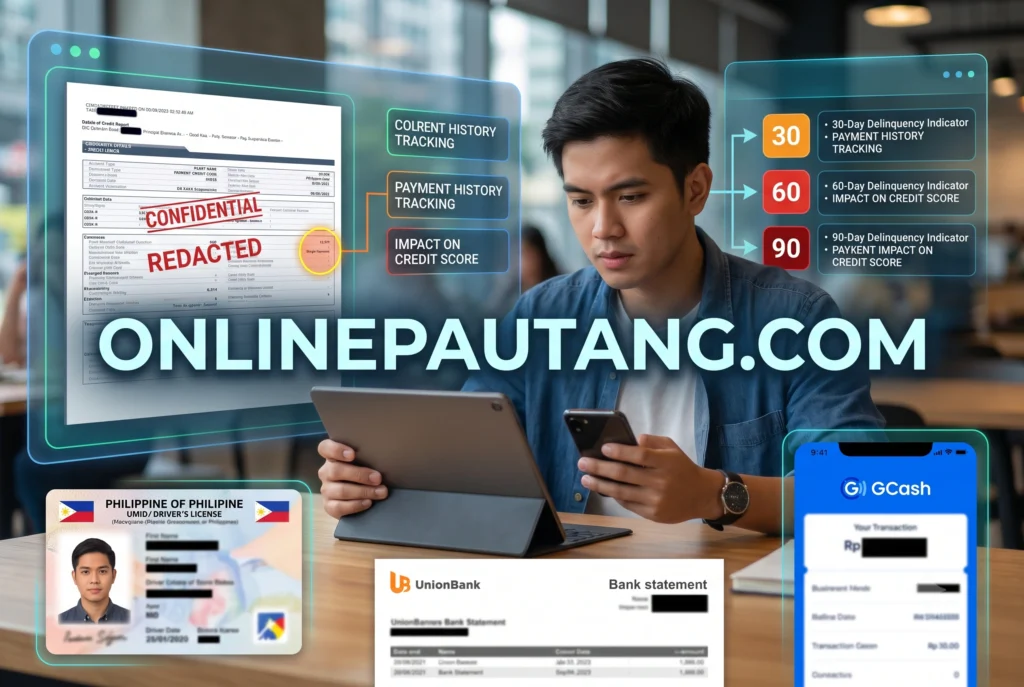
Credit blacklisting means your negative payment history is recorded by the Credit Information Corporation (CIC), causing banks and major fintechs to reject your future loan applications.
This is the most significant long-term consequence of defaulting. The Philippine lending ecosystem is highly interconnected. When you apply for a loan, the algorithm instantly pulls your credit file.
Do Online Lenders Report to the Credit Information Corporation (CIC)?
Yes, legitimate, SEC-registered lending apps are mandated by law to submit borrower credit data, including late payments and defaults, to the CIC.
Not every app reports instantly. Many smaller platforms batch their data submissions monthly. However, major players (like Tala, Billease, or JuanHand) have direct API integrations with credit bureaus. If you default on a ₱3,000 loan today, it will reflect on your CIC report. When you try to apply for a car loan, a credit card, or a legitimate bank loan five years from now, the bank will see that unpaid digital loan and likely flag you as a high-risk borrower.
How Long Does a Bad Record Stay on Your CIC Report?
Negative records, such as defaults and unpaid loans, generally remain visible on your CIC credit report for up to three years from the date of the last update or settlement.
It is a common misconception that paying off an old debt instantly clears your record. If you settle a severely delayed account, the status changes to “Paid” or “Closed,” but the history of delinquency remains visible for several years. This is why addressing the debt, even through restructuring, is always better than abandoning it entirely.
How Can You Handle Harassing Third-Party Collection Agencies?
You can handle harassing collectors by documenting their threats, reminding them of SEC Memorandum Circular 18 regulations, and filing complaints with the NPC or SEC if they cross legal boundaries.
Lenders rarely do their own late-stage collections. Once you are past 30 days late, your account is pushed to a TPA. These agents work on commission, earning a percentage of whatever they squeeze out of you. This incentive structure breeds aggressive behavior.
What Collection Practices Are Illegal in the Philippines?
Illegal collection practices include using threats of violence, publicly shaming borrowers on social media, contacting people in your phonebook, and using false legal documents.
To effectively spot fake or harassing apps, you need to know what they are not allowed to do. Under SEC Memorandum Circular No. 18, Series of 2019, the following are strictly banned:
- Contacting individuals who were not explicitly named as guarantors or co-makers.
- Using obscene, profane, or abusive language.
- Threatening to publish your name as a “scammer” on Facebook.
- Texting blast messages to your employer or relatives.
If an agent does this, take screenshots immediately. You can file a formal complaint with the National Privacy Commission (NPC) for data privacy violations and the Securities and Exchange Commission (SEC) for unfair collection practices.
How Do You Negotiate Loan Restructuring or Amnesty?
To negotiate restructuring, contact the lender’s official customer service email, explain your financial hardship, and request to pay only the principal amount or ask for an installment plan.
Do not negotiate with the aggressive frontline text blasters; they do not have the authority to alter your loan terms. Instead, find the official support email of the lending company.
State clearly: “I am facing severe financial hardship and cannot pay the compounded penalties. I intend to settle my obligation. I am requesting an amnesty to pay only the principal amount of ₱X in two installments.”
Often, TPAs buy debt for pennies on the peso. If a debt is 90 days old, the lender has already written it off as a loss. They are highly motivated to recover at least the original capital. Keep your communication professional, documented, and persistent.
References
- Bangko Sentral ng Pilipinas Organization: BSP Resource: Circular No. 1133 – Ceilings on Interest Rates and Other Fees URL: https://www.bsp.gov.ph/Regulations/Issuances/2022/1133.pdf
- Securities and Exchange Commission Organization: SEC Philippines Resource: Memorandum Circular No. 18, Series of 2019 URL: https://www.sec.gov.ph/mc-2019/mc-no-18-s-2019/
- Credit Information Corporation Organization: CIC Resource: Borrower Rights and Credit Reports URL: https://www.creditinfo.gov.ph/borrower-rights
Disclaimer:This article contains affiliate links. We may earn a small commission if you apply for a loan through our links, at no extra cost to you. The information provided is for educational purposes only and does not constitute professional financial advice. Please borrow responsibly.
Last Updated on July 4, 2026 by Elena Reyes
