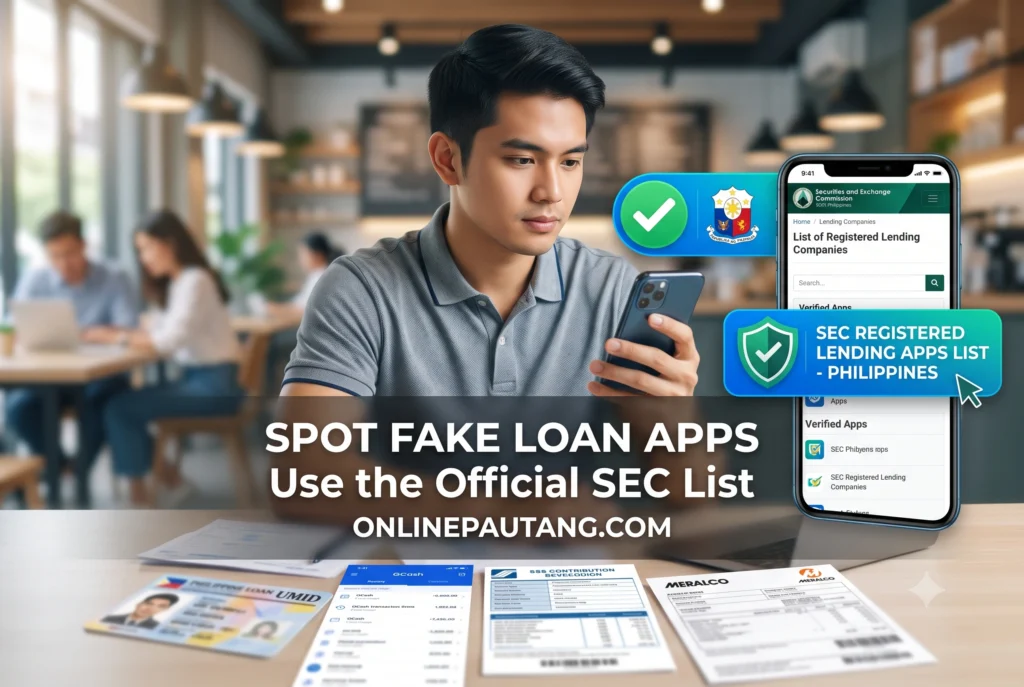
Take a deep breath. If your phone has not stopped ringing and you are receiving threatening messages from a lending application, you need to hear this first: you are not alone, and nobody goes to jail in the Philippines for unpaid civil debt. As an analyst who has tracked digital lending operations across the country for over a decade, I have seen thousands of honest people panic because they downloaded the wrong application. The panic is valid, but the threats are built on intimidation, not the law.
We will break down exactly how you can protect yourself. You do not need to be a finance expert to spot a scam; you just need to know where to look.
Summary: Take a deep breath. If you are receiving threatening messages from a lending app, know that you are not alone and you cannot be jailed for unpaid civil debts. The digital lending space in the Philippines is crowded with both helpful financial tools and aggressive, illegal operators. This guide walks you through exactly how to verify a lender’s legitimacy using the official SEC database, identify predatory data harvesting techniques like contact scraping, and report abusive debt collectors. By learning to check for valid Certificates of Authority and recognizing the warning signs of fake VIP loan platforms, you can protect your privacy, your peace of mind, and your financial future.
Fake vs. Legitimate Lending Apps
| Feature | Legitimate SEC-Registered Lenders | Illegal Online Lending Apps (OLAs) |
| App Permissions | Camera, Location (during use only) | Contacts, SMS, Call Logs, Photo Gallery |
| Transparency | Clear interest rates, exact deduction amounts | Hidden fees, massive upfront deductions |
| Verification | In-app biometric eKYC, valid ID scans | WhatsApp messages asking for selfies with ID |
| Collection Tactics | Professional calls, email reminders | Death threats, messaging your coworkers and family |
| Database Presence | Active Certificate of Authority (CA) on SEC site | Missing from SEC lists, or uses a fake/stolen CA number |
Why Is the Loan App Asking for My Contacts and Photos?
Legitimate lenders only ask for permissions strictly necessary for identity verification, whereas fake apps demand access to your contacts and galleries to weaponize your data.
Before an app even shows you how much you can borrow, a prompt usually pops up asking for access to your phonebook, SMS messages, and media files. A legally compliant fintech operator relies on sophisticated underwriting algorithms and official credit bureaus. They do not need to read your personal text messages. Scammers, on the other hand, build their entire business model around extortion.
What Is Contact Scraping and How Does It Lead to Harassment?
Contact scraping is an illegal practice where an app steals your phonebook to text death threats or shame messages to your family and coworkers if you miss a payment.
The National Privacy Commission (NPC) has issued strict circulars banning the harvesting of contact lists by lending applications. When an illegal operator scrapes your data, they upload your entire address book to their servers. If you are a day late on payment, their unregistered collection agents will create group chats on Facebook Messenger or Viber, adding your boss, your parents, and your friends, falsely claiming you named them as co-makers. This is textbook OLA (Online Lending App) harassment. True banks and registered lenders never resort to public shaming because it directly violates Philippine privacy laws.
Why Should I Avoid Sideloading APK Files from Facebook Ads?
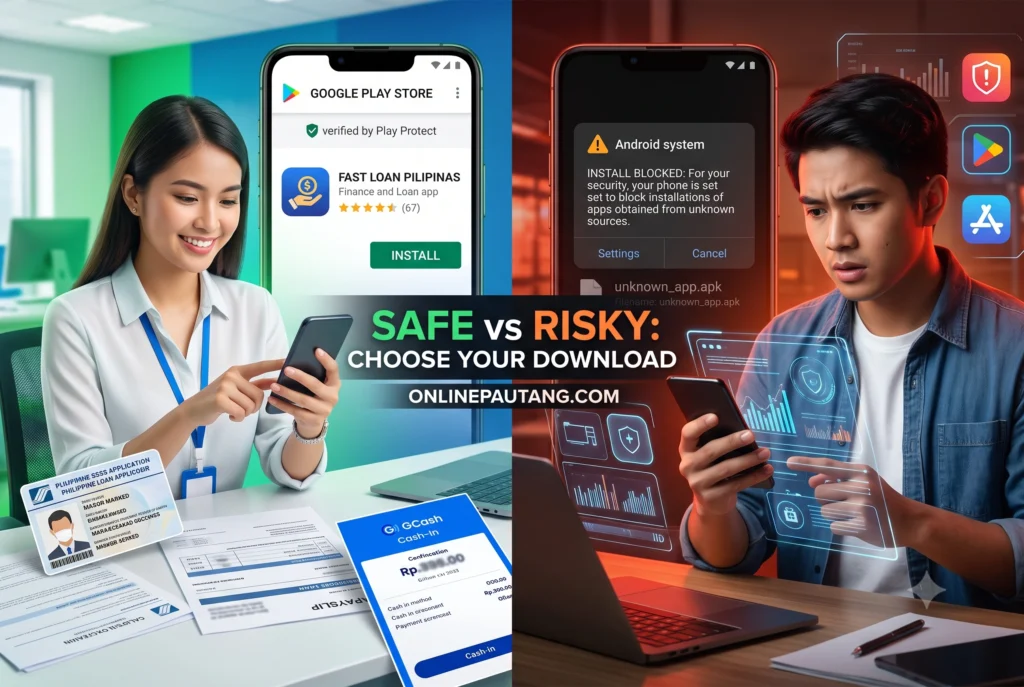
Sideloading an APK file bypasses Google Play Protect, granting scammers total control over your device to steal passwords, read OTPs, and access private media.
Many predatory apps get banned from the Google Play Store or Apple App Store for violating developer policies on predatory lending. To get around this, scammers run sponsored ads on Facebook or TikTok with a link to download an “APK” file directly. Your Android phone will warn you that installing unknown apps is dangerous. Listen to that warning. By forcing the installation, you are giving an unvetted, malicious piece of software system-level access to your phone.
How Do I Verify a Lender Using the SEC Registered Lending Apps List Philippines?
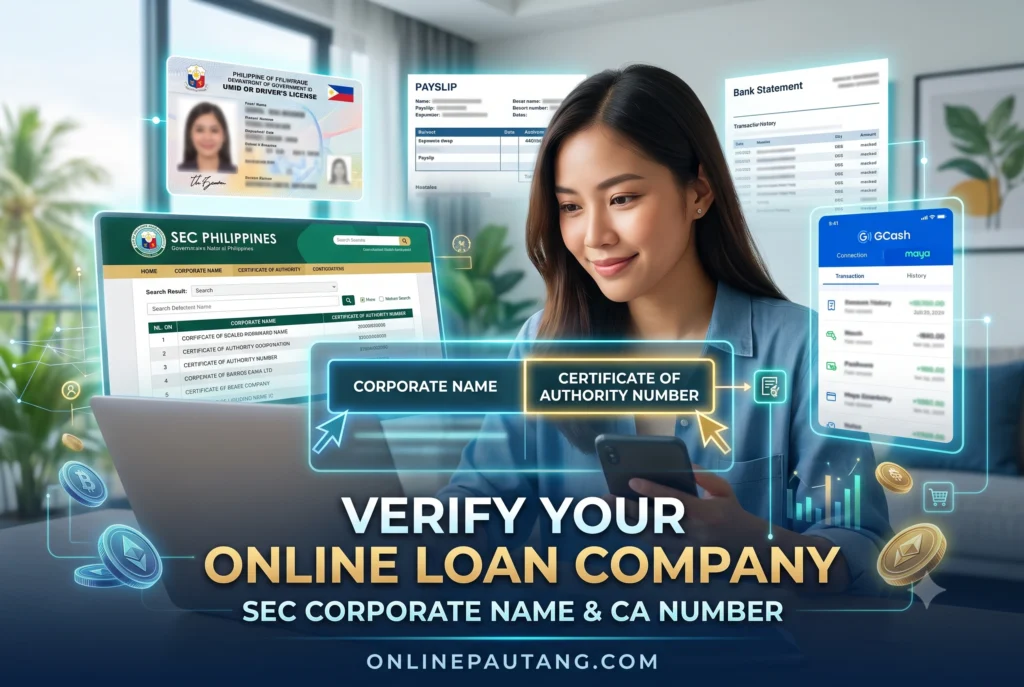
You must check the official Securities and Exchange Commission (SEC) website to confirm if the app’s operating company holds a valid, active Certificate of Authority (CA).
Checking the SEC database is the single most effective defensive strategy a borrower has. However, the process is not always intuitive. Many borrowers search for the app’s commercial name, find nothing, and assume the worst, or worse, trust a fake license number photoshopped onto a Facebook page.
Where Exactly Do I Find the Official SEC Database?
Visit the SEC Philippines official website, navigate to the Lending Companies section, and download the monthly updated PDF list of registered lending entities.
Here is the exact friction point most users face: the name on your phone screen is often different from the corporate name. For example, a legal app might be called “QuickCash,” but the corporate entity holding the license is “Fintech Solutions Philippines Inc.” When you look at the SEC Registered Lending Apps List, you need to check the column labeled “Doing Business Under the Name/s Of.”
If you cannot find the app on the SEC website, check the developer details at the bottom of their app store page. Cross-reference that corporate name with the SEC list. If the name is nowhere to be found, or if the SEC list clearly marks them with a Cease and Desist Order (CDO), stop your application immediately.
What Is a Certificate of Authority (CA) and Why Does It Matter?
A Certificate of Authority (CA) is a mandatory license proving the company is legally allowed to lend money and is subject to BSP and SEC consumer protection rules.
A standard business permit or SEC corporate registration is not enough. Any group of people can register a corporation. To lend money to the public, that corporation must apply for a specific CA. Scammers often flash a regular SEC registration document on their ads to build false trust. You must look for the specific Certificate of Authority number.
What Are the Hidden Red Flags of Illegal VIP Loan Scams?
Illegal VIP loan scams trap desperate borrowers by promising guaranteed high limits but delivering tiny amounts with predatory interest and fake activation fees.
The phrase “VIP Loan” is a psychological trap designed for people who have been rejected by mainstream banks. These apps promise instant approvals of up to ₱50,000 without requiring proof of income. In reality, the VIP tag is bait.
Why Are Processing Fees Deducted Upfront Illegal?
Legitimate lenders transparently calculate fees, but scammers illegally deduct massive processing charges upfront, forcing you to pay back far more than you received.
Imagine applying for a ₱5,000 loan to cover an emergency. The app approves you but immediately deducts a ₱2,200 “service fee” and a “risk assessment fee.” You receive only ₱2,800 in your GCash account, but the app demands you repay the full ₱5,000 within exactly seven days. This practice of exorbitant upfront deduction is illegal. Transparent financial institutions deduct nominal, clearly stated processing fees, but they never cut your principal by 40% before you even see the money.
How Do I Know If the App’s Interest Rates Violate BSP Rules?
The Bangko Sentral ng Pilipinas (BSP) caps interest rates at 15% per month or 0.5% per day for small loans; anything charging more is operating illegally.
Before 2022, digital lenders charged whatever they wanted. Today, the BSP enforces strict ceilings on unsecured, short-term loans. If an app is charging you 3% to 5% interest per day, they are breaking the law. Furthermore, the BSP mandates limits on the penalties for late payments, capping them at 5% per month on the outstanding balance. Scammers ignore these rules, inflating a ₱3,000 debt to ₱15,000 in a matter of weeks through fabricated daily compounding penalties.
How Do I Report a Harassing Loan App in the Philippines?
You can stop the harassment by filing formal complaints with the National Privacy Commission (NPC) for data theft and the Cybercrime Investigation and Coordinating Center (CICC) for threats.
If you are already trapped by a predatory app, acting paralyzed out of fear will only embolden the scammers. You have rights, and government agencies are actively shutting down these operations.
What Steps Should I Take to Involve the NPC and CICC?
Document every threatening text, secure the app’s details, and submit a formal report through the official NPC portal and the CICC complaint hotline.
First, stop talking to the collection agents. They are trained to manipulate your emotions. Take screenshots of every death threat, profane text message, and unauthorized group chat. Note down the exact phone numbers they use and the GCash or bank account names they ask you to deposit money into.
File a complaint with the NPC for unauthorized processing of personal information and contact scraping. Simultaneously, report the extortion and cyber harassment to the CICC (via their 1326 hotline). These agencies coordinate with the Philippine National Police Anti-Cybercrime Group (PNP-ACG) to raid the call centers operating these illegal apps.
What Happens If I Uninstall a Fake Loan App?
Uninstalling the app severs its active connection to your phone, preventing further data theft, though they may still use the information they already stole.
Many borrowers are terrified to delete the app, believing the scammers will somehow know and increase the harassment. This is false. Deleting the app stops them from reading your new text messages or stealing new photos. Before uninstalling, go to your phone settings, revoke all permissions (camera, contacts, storage), clear the app cache and data, and then hit uninstall. You take back control of your hardware.
How Can I Rebuild My Financial Safety After a Bad Loan Experience?
Rebuilding your peace of mind involves freezing compromised accounts, ignoring scammer texts, and strictly using regulated platforms for future financial needs.
Surviving an OLA attack is traumatic. The anxiety of an unknown number calling can linger for months. Your first step to recovery is to replace your SIM card if the harassment does not stop. Inform your close family and employer about the situation; transparency strips the scammers of their blackmail power.
Once the dust settles, focus on finding safe loan apps for beginners that strictly adhere to BSP regulations and hold legitimate SEC licenses. True financial health comes from borrowing only what you can afford to repay, understanding the exact terms before signing a digital contract, and refusing to hand over your personal privacy for quick cash.
References
- Securities and Exchange Commission PhilippinesOrganization: SEC PhilippinesResource: List of Lending Companies with Certificate of AuthorityURL: https://www.sec.gov.ph/lending-companies-and-financing-companies-2/list-of-lending-companies-2/
- National Privacy CommissionOrganization: NPCResource: Circular on the Ban of Contact List HarvestingURL: https://www.privacy.gov.ph/memorandum-circulars/
- Bangko Sentral ng PilipinasOrganization: BSPResource: Caps on Interest Rates and Charges for Small Value LoansURL: https://www.bsp.gov.ph/SitePages/Regulations/Regulations.aspx
- Cybercrime Investigation and Coordinating CenterOrganization: CICCResource: Report Cybercrime Hotline 1326URL: https://cicc.gov.ph/report/
Disclaimer:This article contains affiliate links. We may earn a small commission if you apply for a loan through our links, at no extra cost to you. The information provided is for educational purposes only and does not constitute professional financial advice. Please borrow responsibly.
Last Updated on July 4, 2026 by Elena Reyes
