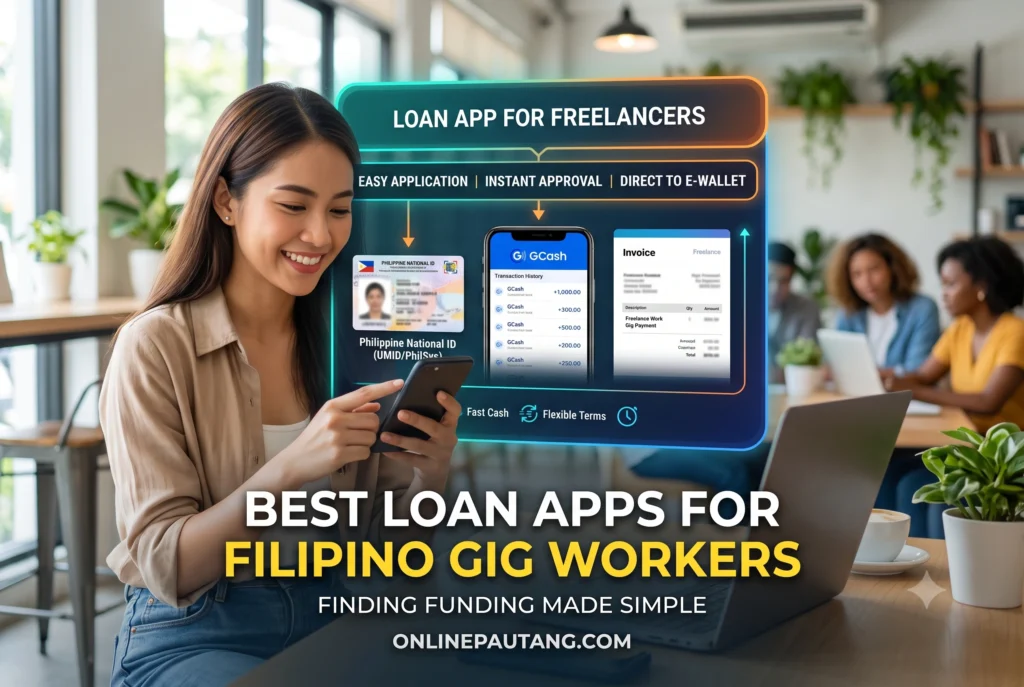
It is a uniquely frustrating feeling: you check your digital wallet, see a solid history of steady cash flow from regular clients, yet a traditional bank rejects your loan application simply because you cannot produce a standard Certificate of Employment (COE) or a corporate payslip. I have sat across the table from incredibly talented graphic designers, TNVS drivers, and virtual assistants who earn well above the median income, only to watch them get denied by rigid banking algorithms. If you are reading this while staring at a blinking cursor on an application form, wondering how to explain your irregular income to an automated system, know that you are not alone. The system was built for 9-to-5 employees, but the reality of the Philippine workforce has evolved. You do not need a traditional payslip to get funded; you just need to know which platforms actually understand the gig economy.
Summary: Freelancers and gig workers can secure funding without standard payslips by using specialized digital loan apps. These platforms evaluate alternative data such as digital wallet transaction history, PayPal statements, and gig platform profiles to approve loans for independent contractors.
Key Takeaways: Top No-Payslip Loan Apps Compared
| Loan App | Best Suited For | Alternative Income Proof Accepted | Typical Monthly Interest Rate | Max Initial Loan (PHP) |
| Tonik | Upwork/Fiverr Freelancers | Bank transaction history, 1 Valid ID | 4.24% – 4.50% | Up to 50,000 |
| Tala | Direct Client Contractors | Android device data, GScore | Tiered (Dynamic) | Up to 15,000 |
| JuanHand | Grab/Foodpanda Drivers | Platform driver profile, 1 Valid ID | Varies based on risk | Up to 15,000 |
| GCredit/Maya | Consistent E-wallet Users | E-wallet transaction volume | ~3.99% – 5.00% | 2,000 – 15,000 |
Why Is It So Hard for Freelancers to Get Approved for Traditional Loans?
Summary: Traditional banks rely on fixed-income indicators like COEs and BIR Form 2316 to assess risk. Freelancers experience fluctuating income, making them appear high-risk to legacy banking systems that cannot process non-traditional financial documentation.
How Do Loan Apps Evaluate Irregular Income?
Traditional banks operate on legacy risk models. When they look at your application, they are searching for predictability. A standard bank wants to see BIR Form 2316 or a corporate payslip to guarantee that you will have the exact same amount of money coming in next month.
Digital lending apps, however, utilize alternative credit scoring models. When our team tested the underwriting flows of several top apps, we observed that they do not care about a corporate letterhead. Instead, they analyze behavioral data. If you are an active user, they look at your cash-in frequency, how consistently you pay your utility bills through their ecosystem, and your overall digital footprint. They assess your “ability to pay” not by looking at a static document, but by analyzing the living, breathing data of your financial habits.
What Are the Real Requirements for Gig Workers?
To successfully navigate these applications, you must shift your mindset from “providing documents” to “providing data access.” Most legitimate online lending platforms require only one primary valid ID (like a Passport, Driver’s License, or National ID) and a selfie. The heavy lifting is done in the background.
For instance, when you apply for a digital bank loan, the app might request read-only access to your smartphone’s SMS to parse bank transaction alerts, or it will analyze the velocity of funds moving through your linked e-wallets. If you are registered as a professional, submitting your BIR Form 1701 provides a massive boost to your credit limit, but it is rarely a strict requirement for initial micro-loans.
What Are the Best Loan Apps for Freelancers Without Proof of Income?
Summary: The top loan apps for freelancers in 2026 include Tonik for larger amounts, Tala for quick cash flow-based approvals, JuanHand for gig economy drivers, and GCredit or Maya Credit for users with strong digital wallet transaction histories.
Tonik App: The Neobank Solution for Upwork and Fiverr Freelancers
Tonik has positioned itself as a highly responsive digital bank that actually understands freelance cash flow. In our experience, Tonik’s Quick Loan is arguably the best entry point for high-earning freelancers who lack formal HR departments.
Because Tonik is a regulated neobank, its underwriting process relies heavily on how you use its ecosystem. If you regularly route your client payments from Payoneer or direct bank transfers into a Tonik Stash, the app recognizes this steady inflow. You can borrow up to PHP 50,000 with monthly interest rates hovering around 4.24% to 4.50%. The UI is exceptionally clean, but a word of advice: ensure the ID you scan perfectly matches your registered name, as their automated eKYC system is highly sensitive to middle initial discrepancies, which can trigger a manual review delay of up to 48 hours.
Tala Philippines: Best for Cash Flow Based Assessment
Tala remains a cornerstone for micro-lending because it essentially ignores traditional employment metrics. When testing Tala’s onboarding, we noticed it heavily weights device data and alternative behavioral signals.
If you are a freelance graphic designer needing quick funds for a laptop repair, Tala can disburse amounts ranging from PHP 1,000 to PHP 15,000 almost instantly. They do not require a payslip. Instead, they look at your historical repayment behavior if you are a returning user, or alternative data points if you are new. However, be cautious with the interest rates; while accessible, micro-loans carry dynamic fees that are steeper than bank loans, so strictly borrow what you can repay within their 15 to 60-day windows.
JuanHand: Fastest Approval for Grab and Foodpanda Drivers
For TNVS drivers and delivery riders, income fluctuates wildly based on weather, demand, and platform incentives. JuanHand has optimized its AI-driven approval engine to cater exactly to this demographic.
Operating as an SEC-licensed fintech, JuanHand requires only a valid ID and personal details, entirely bypassing the income document barrier. Approval takes minutes. We have found that gig workers who maintain an active, unflagged mobile number and consistent digital wallet activity get approved rapidly.
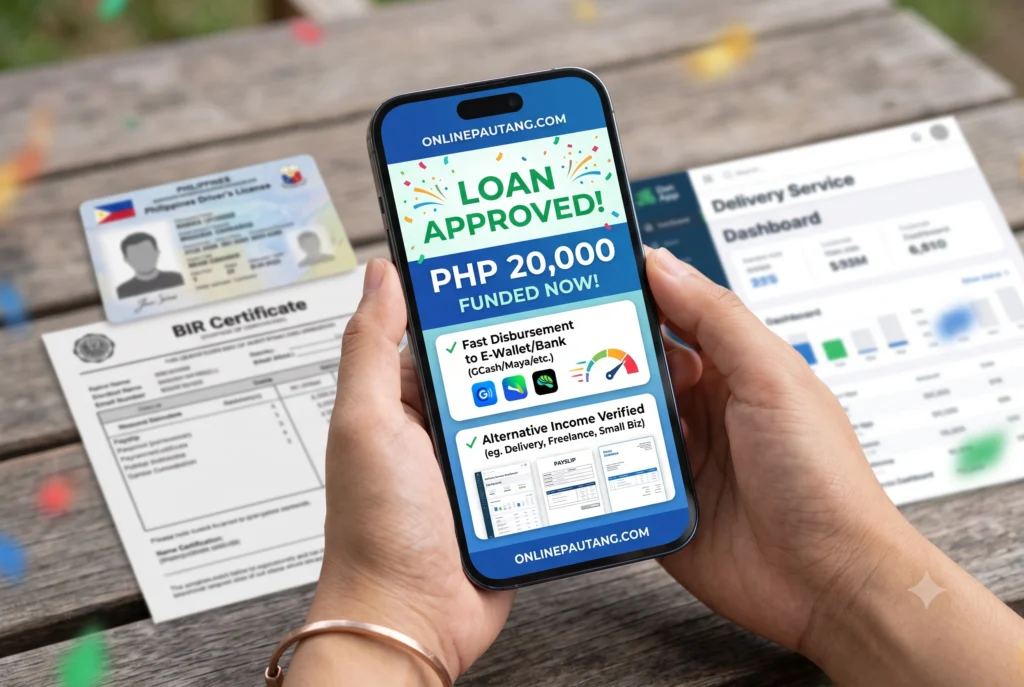
GCredit and Maya Credit: Utilizing Digital Wallet Transaction History
If you do not want to download a separate application, look at the tools already in your pocket. GCredit (powered by CIMB) and Maya Credit operate as revolving credit lines based entirely on your wallet behavior.
Your GScore or Maya credit limit is determined by your cash-in frequency, bill payments, and transfer volumes. If you frequently receive freelance payments and cash out via GCash, the algorithm recognizes you as a highly liquid user. Maya evaluates your account activity to grant limits ranging from PHP 5,000 to PHP 15,000, charging interest only on the amount you actually use. This is the safest, most transparent form of emergency funding for irregular earners.
How Should Freelancers Fill Out the “Employer Name” Field in Loan Apps?
Summary: When forced to fill out an “Employer Name” field, freelancers should input their registered business name, their primary platform (e.g., Upwork), or simply state “Self-Employed / Independent Contractor” along with their own contact details.
Tactical Workarounds for Upwork and Independent Contractors
One of the most persistent UI friction points we see in loan applications is the mandatory “Employer Name” and “HR Phone Number” fields. App developers often hardcode these fields, leaving freelancers stranded.
Based on extensive operational testing, here is the exact tactical approach: If you are an active platform worker, input the platform name (e.g., “Upwork Global Inc.” or “Fiverr”). For the HR contact number, use your own secondary mobile number or your verified business landline. If you work directly with international clients, input your registered DTI business name. If you are unregistered, writing “Self-Employed – [Your Profession]” is widely accepted by modern eKYC systems. The algorithms flag blank spaces and obviously fake numbers (like 09999999999), not self-employment declarations.
Do Lending Apps Actually Call Your Clients?
A massive source of anxiety for freelancers is the fear that a loan app will harass their overseas clients or gig platform support. Legitimate, SEC-registered online lending platforms do not call your clients to verify your income. They rely on the alternative data points discussed earlier.
However, they will call the character references you provide if you default on your payments. Always ensure you only deal with alternative income loan platforms that are strictly regulated by the National Privacy Commission (NPC) to prevent unauthorized access to your phonebook contacts.
Can I Use My PayPal History Instead of a Payslip?
Summary: Yes, consistent PayPal, Pioneer, or Wise transaction histories serve as robust proof of income for alternative lenders, effectively replacing the need for a traditional corporate payslip.
Validating Income Through Alternative Income Loan Platforms
Many freelancers leave their funds in PayPal or Payoneer until the exchange rate is favorable. While a traditional bank officer might not know how to process a PayPal CSV export, digital lenders understand this perfectly.
When applying for larger amounts (like a Tonik installment loan or a Billease credit line), you can often link your digital bank accounts or submit screenshots of your recent PayPal remittance history. Ensure the screenshots clearly show your name, the transaction dates, and the consistent inflow of funds. This establishes a predictable cash flow pattern, completely bypassing the need for a standard HR-issued document.
What Are the Risks and SEC Regulations You Must Know?
Summary: Borrowers must ensure they only use SEC-registered apps that comply with the 2025 BSP and SEC interest rate caps, which limit nominal interest rates to 6% per month to prevent predatory lending cycles.
Understanding the 2026 BSP and SEC Interest Rate Caps
As a borrower, your greatest defense is knowing your regulatory rights. The digital lending space has been heavily reformed. Following the issuance of SEC Memorandum Circular No. 14, Series of 2025, there is a strict recalibrated ceiling on interest rates for small consumer loans.
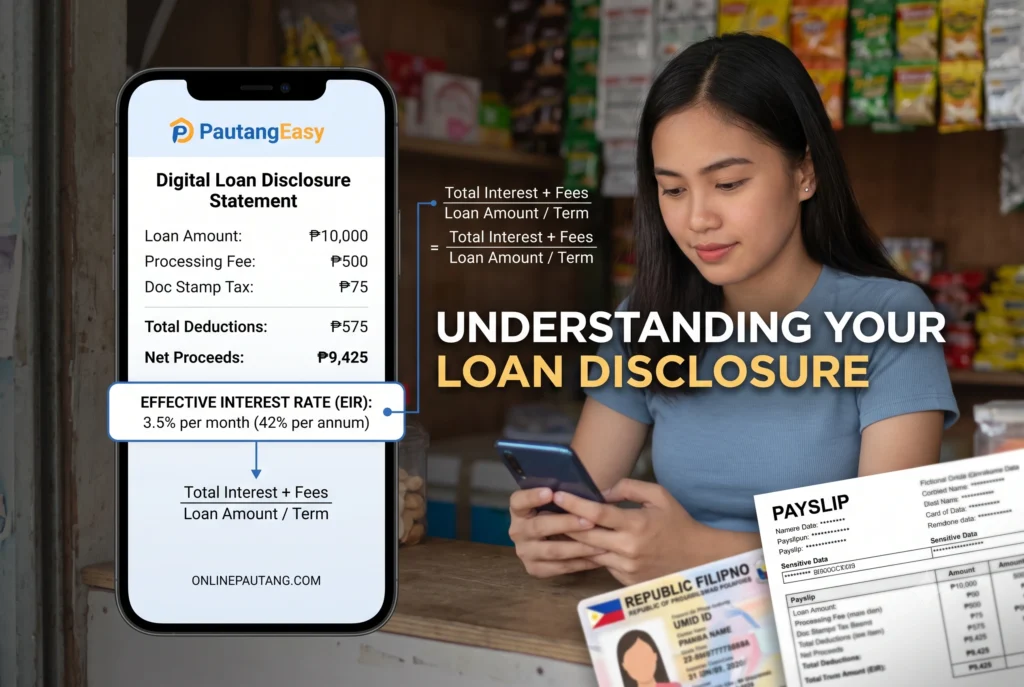
Currently, legitimate financing companies are legally bound to a 6% per month cap on nominal interest rates and a 12% monthly cap on effective interest rates for loans up to PHP 10,000. If an app tries to charge you 20% in a single week or demands an upfront “processing fee” deducted from your principal that violates these effective interest rate caps, you are dealing with a predatory, likely unregistered lender.
How to Protect Yourself from Predatory Lenders
The urgency of needing cash can cloud judgment, but you must remain analytical. Never grant an app permission to access your contact list or photo gallery – legitimate KYC processes only require camera access at the exact moment you are taking a live selfie.
Always check the SEC’s official list of registered lending companies before hitting download. If you find yourself trapped by a harassing lender, remember that under Philippine law, unpaid civil debts do not automatically lead to imprisonment. Document any harassment, file a formal complaint with the SEC and the NPC, and prioritize your mental health over predatory intimidation tactics.
Financial agility as a freelancer is entirely possible today. By leveraging your digital footprint and understanding exactly how these alternative algorithms assess risk, you can access the capital you need to keep your gig business thriving.
References
- Securities and Exchange CommissionOrganization: Securities and Exchange Commission (SEC) PhilippinesResource: SEC sets limits on interest, fees for small consumer loansURL: https://bworldonline.com/corporate/2025/12/12/718325/sec-sets-limits-on-interest-fees-for-small-consumer-loans/
- Tonik Digital BankOrganization: Tonik BankResource: What are the Best Loan Apps in the Philippines?URL: https://tonikbank.com/blog/what-are-best-loan-apps-philippines
- Remote Staff InsightsOrganization: Remote StaffResource: Updated 2026 PH Loan Facilities – and How To Avail ThemURL: https://www.remotestaff.ph/blog/types-of-loans-and-how-to-apply-philippines/
Disclaimer:This article contains affiliate links. We may earn a small commission if you apply for a loan through our links, at no extra cost to you. The information provided is for educational purposes only and does not constitute professional financial advice. Please borrow responsibly.
Last Updated on August 10, 2026 by Elena Reyes
